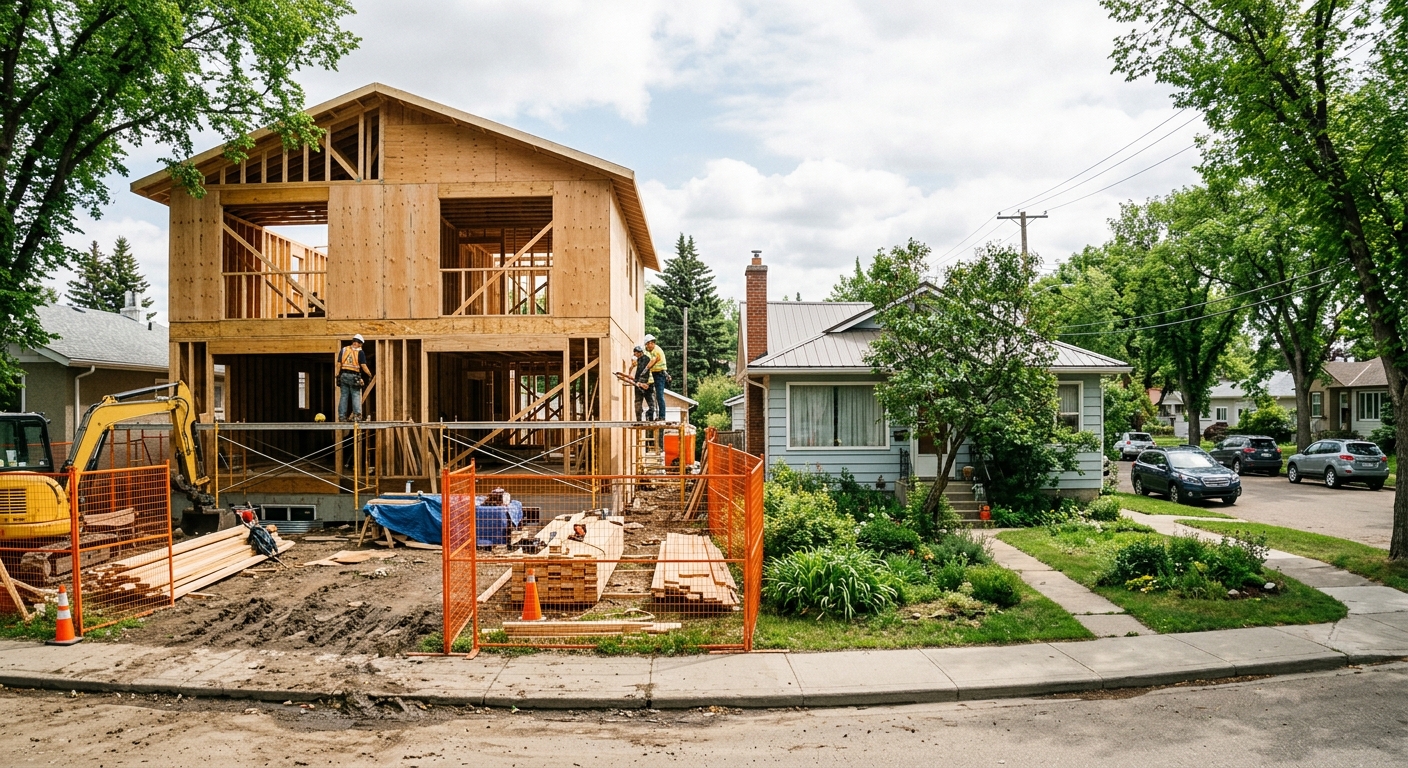
AI-generated illustration; not a photograph of the reported event.
- calendar_today October 8, 2026
Alberta Government Orders Change to Edmonton Infill Rules
The Alberta government has announced significant new development measures that will require the City of Edmonton to alter its current approach to infill rules, impacting how high density housing is permitted within the city’s neighbourhoods. The move will see Edmonton revert to zoning bylaws that were in place before 2024 and reinstate on-site parking requirements from before 2020.
Reversal to Previous Zoning Bylaws
During a news conference on Thursday, Premier Danielle Smith detailed the decision, citing concerns over Edmonton’s current zoning bylaws related to infill development. The provincial directive mandates that the city repeal its recent zoning changes and return to previous regulations regarding housing types, density, height, and parking requirements. According to Smith, these changes are intended to address issues such as strained infrastructure, congested streets, and declining property values attributed to the accelerated pace of high density housing.
Concerns Over Neighbourhood Impact
Premier Smith emphasized that while the city has made amendments to its infill bylaws, the overall approach remains problematic. She stated, "The goal should not simply be more housing, but more housing that is planned and integrated in a way that works for both existing residents as well as future families." Critics argue that recent infill projects, including large multiplexes and multi-storey buildings, have had a negative neighbourhood impact, particularly in established and historic districts.
Municipal Affairs Minister Dan Williams echoed these concerns, noting a lack of adequate resident consultation and insufficient checks and balances in managing housing density. Williams acknowledged that provincial intervention in local zoning bylaws is uncommon, but described it as necessary to ensure "safe, affordable and livable communities."
Timelines and Broader Land Use Review
Under the new directive, Edmonton has three months to amend its zoning bylaws to comply with the province’s requirements. Additionally, the city must conduct a comprehensive land use review over the next 18 months to develop a more balanced approach to infill development. Calgary, Alberta's other major city, is required to retain its pre-2024 bylaw framework and carry out its own broader land use review, scheduled for completion in 2027.
Premier Smith stated that these actions are in response to population growth and increasing pressure on housing supply in Alberta’s major cities, which have seen record numbers of new housing starts. She noted that while Calgary has adjusted its zoning bylaws in response to similar concerns, Edmonton’s current infill rules "remain out of sync with what responsible development should look like."
Reactions from City Officials
The provincial directive has prompted strong reactions from Edmonton city officials. Mayor Andrew Knack criticized the province’s approach, calling it an "uninformed directive" that could increase property taxes, exacerbate housing affordability challenges, and cause uncertainty for residents. He defended Edmonton’s approach to urban planning, emphasizing the need for "smart growth" leveraging existing infrastructure to reduce urban sprawl and costs passed onto taxpayers.
Mayor Knack urged Premier Smith to reconsider the initiative, stating that decisions about municipal development and zoning bylaws should remain with city council. He argued that provincial intervention risks causing "tremendous chaos" and said, "I am focused on stable leadership and a predictable investment climate, at a time when our province is already facing so much uncertainty." City officials have also pointed to the necessity of infill development to manage population growth and city expansion sustainably.
Next Steps for Edmonton
As part of the directive, Edmonton’s city administration is scheduled to publish a public report by the third quarter of 2027 to assess how infill development has affected neighbouring property values. Meanwhile, both Edmonton and Calgary will continue to review their land use and zoning policies in response to the province’s new requirements, with ongoing debates about the balance between responsible growth and neighbourhood preservation.
Source: cbc.ca.