
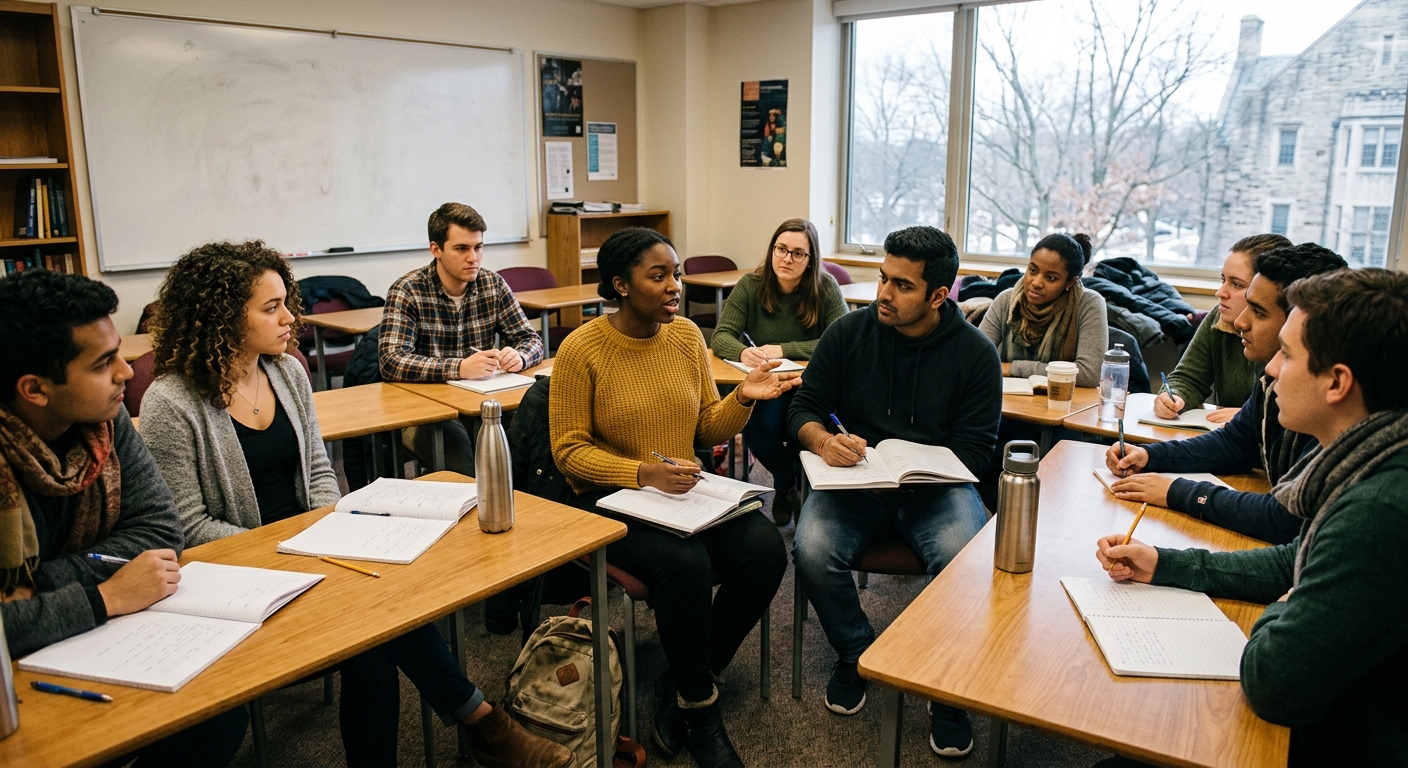
AI-generated illustration; not a photograph of the reported event.
- calendar_today October 11, 2026
Political Science Students Witness Historic Alberta Referendum
As Alberta approaches a significant referendum, political science students at the University of Calgary are finding themselves at the intersection of academic study and history in the making. CBC News visited a class at the university to hear firsthand how students are experiencing and analyzing the ongoing political developments related to the upcoming vote.
Real-Time Learning: From Past Events to Present Decisions
Richard Kuperis, a third-year political science student, initially enrolled in a course on Alberta politics out of interest and convenience. He expected it to focus on historical analysis, much like his other courses, but the timing of the current referendum has transformed the class into a live exploration of contemporary political dynamics. "Now that a referendum is happening, the timing of it is really interesting to go, 'Wow, I'm really learning about something that I now have something affecting my life,'" Kuperis shared.
In just over a week, Albertans are set to vote on ten key questions, touching on immigration, constitutional matters, and the possibility of the province pursuing further steps toward separation or holding a second, binding referendum on the issue.
Classroom as a Forum for Diverse Perspectives
The political science class, featuring students like Maia Rajic, Elizabeth Raymond, and Sam Virk, has become a space for exchanging views and broadening understanding. Rajic, who is double-majoring in business and political science, emphasized how the classroom environment—populated by students from Calgary as well as other regions—has broadened her own outlook. "[We] come in with an open mind, argue with each other and learn from each other," she said, remarking on the varied backgrounds represented in the class.
Rajic looks forward to seeing how the class's discussions will relate to the actual outcome of the referendum, noting the unique educational experience of studying a major political event as it happens.
Teaching and Learning a Historic Event as It Unfolds
Lisa Young, professor of political science at the University of Calgary, leads the course. While the curriculum covers Alberta's broader political history, Young acknowledges the unique opportunity presented by the referendum. She aims to foster an environment where students can respectfully explore differing viewpoints, noting, "Politics is an area where we all have our own perspectives, our own interests, our own attitudes. And I'm human, they're human. We can actually learn from one another if we come to the table willing to share our beliefs, but we need to do it in a civilized way."
For Elizabeth Raymond, the class serves as a platform to better grasp Alberta’s evolving status in Canada and why individuals might support one path over another. "It is learning, where does Alberta fit into Canada? Where do all of these arguments — this disagreement, this division — where does that fit in in Alberta? And how can I take what I learned, especially from other people in the class?" Raymond explained.
Reflecting on Past and Present Political Moments
Lisa Young recalls her own experience as a master's student during the negotiations of the Meech Lake Accord from 1987 to 1990 and its eventual failure. The stalled deal, which attempted constitutional amendments to keep Quebec in Canada, was a defining moment for many students of the era. Young sees parallels in the current referendum, calling it a vivid and potentially formative experience for her class.
Student Sam Virk reflects on the immediate personal relevance of the class amid the referendum, suggesting it may become one of the most significant courses of his university career. He observes that future classes might look back on the discussions and interviews from today as part of their own examination of Alberta's political trajectory.
Looking Ahead: Students as Witnesses to History
As the referendum draws near, the atmosphere among political science students is one of anticipation and reflection. They are not only studying Alberta’s politics and history—they are living through a critical moment that may shape the province’s future and, in turn, change how future generations study this period.
With the outcome of the referendum poised to become a landmark in Alberta and Canada’s political narrative, these University of Calgary students are embracing both the challenges and opportunities that come with studying—and experiencing—history as it happens.
Source: cbc.ca.




