
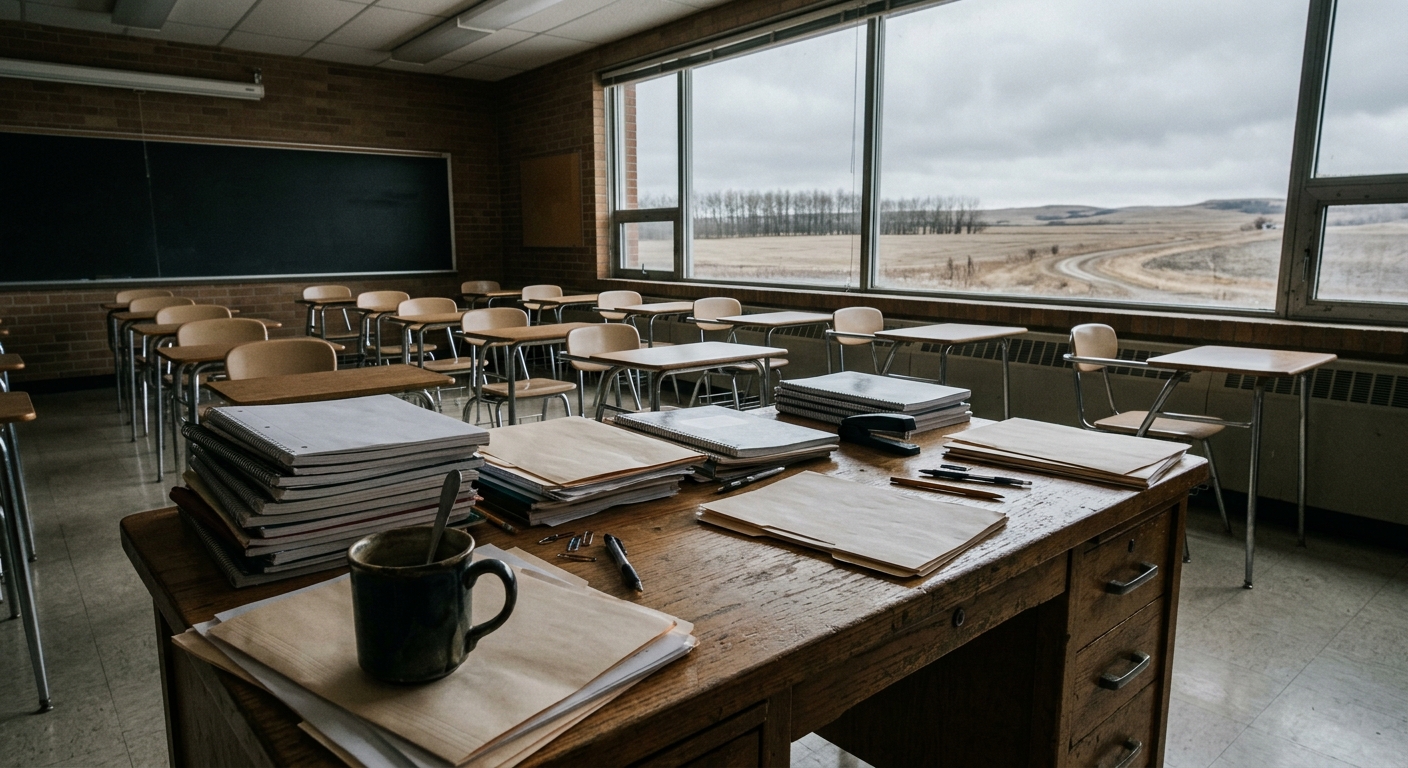
AI-generated illustration; not a photograph of the reported event.
- calendar_today October 12, 2026
A Year After the Strike: Have Alberta Classrooms Improved?
Fall marked a significant anniversary in Alberta’s education sector—the first school year since the landmark teachers strike of October 2025. The strike, which saw 51,000 teachers walk out and 750,000 students locked out for over three weeks, brought unprecedented attention to teacher working conditions, class size, and government education policy. A year later, as politicians highlight investments in education, questions remain over whether real progress has been made.
Background: The 2025 Alberta Teachers Strike
The 2025 strike was triggered by failed contract negotiations and rising frustrations over stagnant pay, deteriorating classroom conditions, and increasing student enrolment. Many educators demanded smaller class sizes or mechanisms in contracts to manage workloads. After teachers rejected two contract offers, the situation culminated in the largest labor action of its kind in Alberta’s history. The government responded by passing Bill 2, imposing a four-year contract, ending the lockout, and pledging actions to reduce classroom pressure.
Government Actions and New Investments
Following the dispute, the Alberta government committed to hiring 1,000 new teachers per year over three years to manage rapid student growth. In 2025, Premier Danielle Smith’s cabinet established a committee with $400 million to improve conditions. Announcements included adding 539 ‘complexity teams’ (one teacher and two educational assistants each for elementary schools), 160 similar teams for junior and senior high schools, and aiming to hire 1,400 new teachers for kindergarten to Grade 9 to help reduce class size.
Education Minister Demetrios Nicolaides assured parents, “More teachers, more support staff and more schools... you will find more from your government in our schools this year.” He estimated average class size could drop to 22 students if hiring targets were met.
Progress Toward Hiring Targets
Despite government claims, ministry data from mid-September showed progress lagging in some areas. Only 566 of 699 promised complexity team teachers and 1,044 of 1,238 educational assistants had started. For the 1,400 class size reduction teachers for K-9, school boards filled only 1,090 positions. Of the 1,045 new full-time teaching roles budgeted in 2025–26 (a commitment predating the strike), less than half (471) were filled by fall.
Hiring was particularly difficult in rural and remote areas. Lorraine Stewart, president of the Public School Boards Association of Alberta, said incentives may be needed to attract staff to those regions.
Teacher Shortage and Substitute Crisis
The rush to fill permanent positions created another issue: a shortage of substitute teachers. Alberta Teachers’ Association (ATA) president Jason Schilling noted many new hires were formerly substitute teachers. As a consequence, schools struggled to find subs for absences, leading some administrators to combine classes or place non-certified supervisors with students. Calgary high school teacher Stephen West said, “Complexity teams are a ‘Band-Aid’ solution,” adding schools actually need thousands more teachers to match enrolment growth.
Data also show Alberta’s K–12 population rose by 90,000 (about 12%) between 2021 and 2025, exacerbating the need for more staff and straining education funding. The government is expanding education program capacity and fast-tracking certification for tradespeople, but questions about teacher morale and working conditions persist.
Educators Weigh In: Mixed Results and Ongoing Concerns
Teacher responses to new hiring have been mixed. Some reported smaller classes, others found their workload unchanged or increased. Edmonton Public Teachers Local 37 president Heather Quinn acknowledged new measures help, but criticized them as overdue. “You could also say that it’s 10 years too late,” she said.
The government’s use of the notwithstanding clause during the dispute suspended teachers’ right to strike and assemble, a matter the ATA continues to challenge in court. Meanwhile, some educators question whether improved staffing will be enough to restore morale and stem the tide of teachers leaving the profession.
Alberta NDP Leader Naheed Nenshi said there’s been little progress on teacher morale and systemic issues: “You can’t fill a bucket with money if there’s a giant hole in the bucket—and they’ve done nothing to address the hole.”
Looking Ahead: Lasting Change or More to Do?
As the first post-strike school year unfolds, it remains unclear if investments have resolved core problems. While thousands of new educators and complexity teams have joined Alberta classrooms, teacher stories suggest conditions remain challenging. For many, the strike succeeded in raising the profile of education issues, but the path to fully addressing teacher shortage, rising student enrolment, and workload pressures may still be long.
Source: cbc.ca.