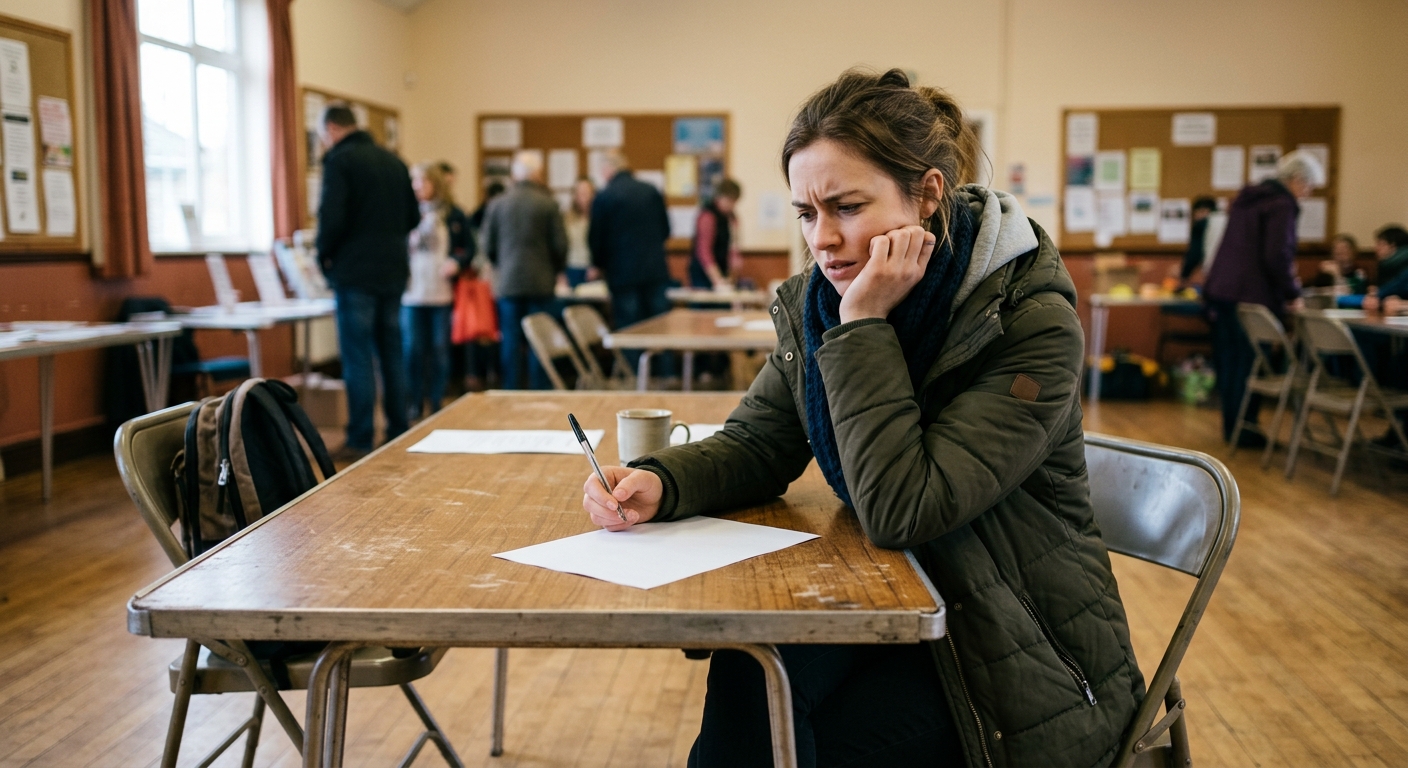
AI-generated illustration; not a photograph of the reported event.
- calendar_today October 12, 2026
Complex Wording of Alberta Referendum Questions Raises Concerns
As voters in Alberta prepare for the upcoming referendum on October 19, many are finding the ballot questions challenging to understand. With 10 lengthy questions on the ballot, both experts and voters are highlighting issues around referendum complexity, readability, and the potential for voter confusion.
Experts Weigh In On Question Readability
Carla Hudson Kam, head of the department of linguistics at the University of British Columbia, noted the difficulty of the ballot questions due to their sentence structure and the number of embedded clauses. Hudson Kam, herself an academic with a PhD, said, "I had to sit here and read these questions several times and think about what each of the pieces meant." She emphasized that her comments are not a reflection on the intelligence of Albertans but rather on the expectations required for complex reading comprehension.
Referring specifically to the alberta referendum questions, Hudson Kam explained, “These are … substantially higher, probably, than the average reading level of most Albertans.” She pointed out that people generally engage with much simpler texts in their daily lives, which means complex materials can pose more difficulty than in the past.
Analyzing the Most Complex Questions
The lengthiest question on the ballot is Question 8, asking whether Alberta should work with other provinces to amend the Canadian Constitution regarding opting out of federal programs while retaining related federal funding. This question is 58 words long—longer than Robert Frost’s poem "Nothing Gold Can Stay" and the preamble to the U.S. Constitution.
Using the Flesch-Kincaid readability test, CBC News found that this question scored at a “college graduate” reading level, indicating it is very difficult to read. The question about separation, though shorter by 21 words, received an identical readability score. Such measurements further highlight concerns about question readability on the ballots.
Public Opinion and Voter Experience
Feedback from the public has been mixed. On Calgary’s Bow River, residents interviewed by CBC Radio’s Calgary Eyeopener offered differing assessments of the ballot wording. Andrew Poole, reviewing Question 4 about charging non-permanent residents for public services, found it straightforward. Others, like KT Kaufmann, described the questions as "word salad" and expressed suspicions that the complexity could confuse voters deliberately.
Polling has also suggested that nearly half of respondents are either unfamiliar or only somewhat familiar with the nine non-separation ballot questions, further indicating possible issues with voter confusion and a need for greater voter education on referendum voting.
Elections Alberta Provides Voting Assistance
Elections Alberta is encouraging all voters to "familiarize themselves with the questions before arriving to vote." The agency provides a “how to vote” guide in 27 languages and allows the use of personal translation devices and aids, such as magnifying tools, at polling stations. Voters may also bring a friend or family member to assist them, provided the helper signs a declaration to maintain vote secrecy.
Election officials are available to assist with the voting process itself; however, under provincial law, they cannot provide translation or interpretation of the ballot wording. Any detailed questions about the meaning behind the referendum questions must be directed to the provincial government or to Members of the Legislative Assembly (MLAs).
Importance of Preparation and Avoiding Misinformation
Hudson Kam stressed the significance of taking time to understand each question to avoid relying on potentially biased second-hand interpretations. "With the complexity of these questions, there’s a lot of opportunity for misinformation … for people to be told what they’re voting on by somebody else who will have a particular side," she warned.
With the referendum approaching, organizations across the province are holding information sessions to help clarify the questions for voters. However, the challenge of referendum complexity and question length means personal preparation remains crucial for Albertans heading to the polls.
Source: cbc.ca.