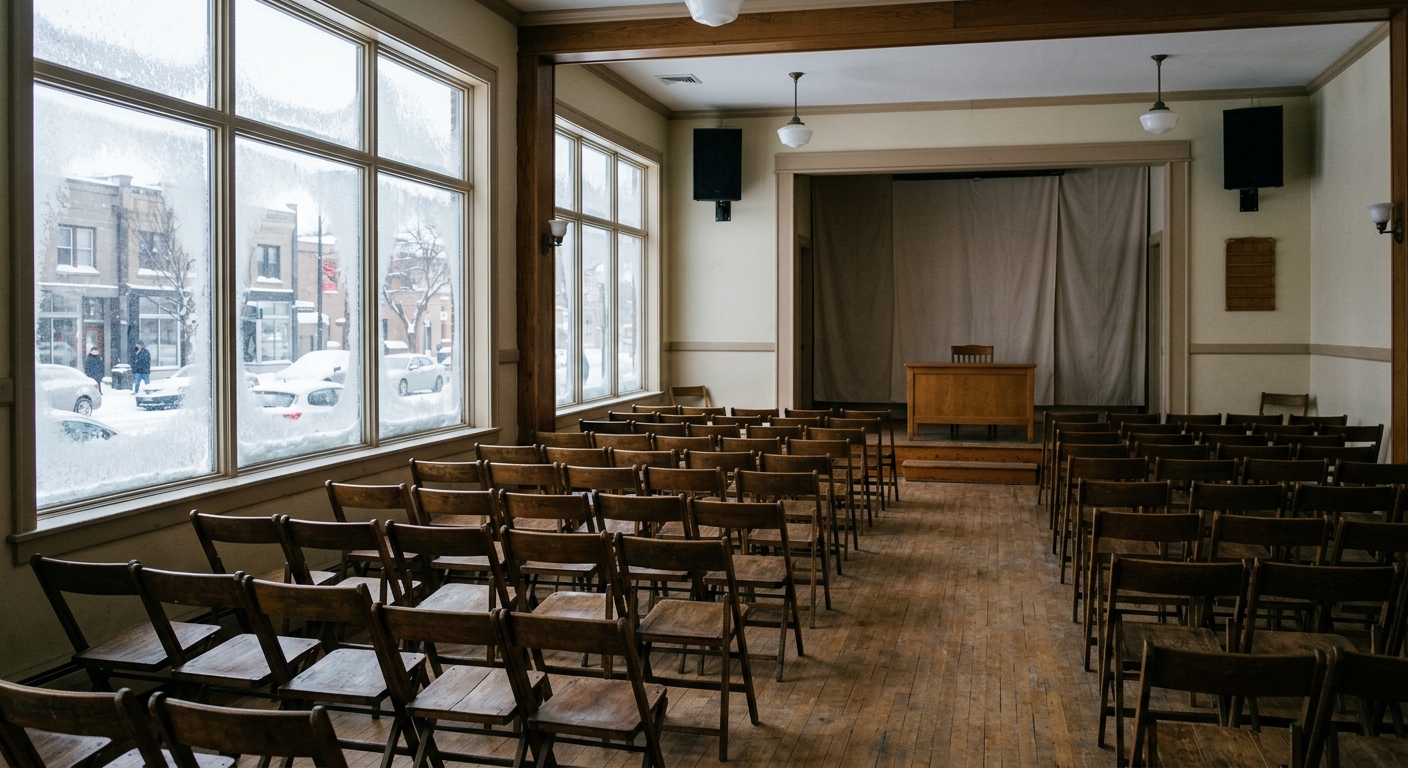
AI-generated illustration; not a photograph of the reported event.
- calendar_today October 14, 2026
Edmonton Reviews Community Court Option for Bylaw Offences
Edmonton City Council is set to consider implementing a community court system for people fined under the city's public spaces bylaw, in an effort to address the ongoing challenges faced by vulnerable populations. The proposal, expected to be discussed by the city's community and public services committee on October 19, follows a directive from city council in the spring to explore the feasibility, costs, and benefits of such a court.
Current Process for Bylaw Fines
Offences under the public spaces bylaw include activities like panhandling, loitering, and open drug use. Individuals receiving tickets can currently dispute the charge in court, pay the bylaw fine, serve jail time, or complete community service in lieu of payment. Many recipients are experiencing homelessness, mental health issues, or addictions and are often unable to pay the fines imposed—such as $25 for panhandling or occupying a temporary shelter—according to a new city report.
Proposed Community Court Model
The proposed community court would be municipally run and could waive fines for eligible participants. Rather than focusing on prosecution, the court would connect individuals with social services in an attempt to break the recurring cycle of bylaw infractions. Councillor Anne Stevenson, who introduced the motion to explore the court, stressed it could offer a more compassionate and effective approach for the city. "If we are just repeatedly giving out tickets to individuals who don't have other options, we're not really solving the problem," she said.
Concerns Over Poverty Criminalization
Not all groups support the idea. The Edmonton Coalition on Housing and Homelessness (ECOHH) argues that a community court could further criminalize poverty. David Rivera-Kohr of ECOHH suggested adopting an administrative approach, such as requiring people to fill out a form and meet with a social worker to have their fines waived, rather than establishing a court system. "We don't need to put people in a courtroom in order to get their tickets rescinded," Rivera-Kohr said, emphasizing that funds could be better used for social programs and supports, which he described as "severely, severely underfunded." ECOHH also supports removing bylaws they believe criminalize poverty.
Calgary’s Experience with a Community Court
Calgary has operated a community court since 2024, managed by Calgary Legal Guidance in collaboration with municipal bylaw enforcement. Executive director Lisa Stebbins noted that traditional fines often keep vulnerable people in poverty. Instead, the Calgary community court assigns participants a wellness plan that addresses issues such as addictions, mental health, homelessness, and employment. Successful completion of the plan—termed "graduation"—can result in the removal of fines and charges. As of June 2026, 950 individuals have participated, with 526 graduates having fines or charges dismissed.
While Calgary’s approach aims to provide support, Rivera-Kohr criticized it as "paternalistic" and "coercive," because participation in care plans is mandatory to have tickets repealed.
Operational Costs and Next Steps
The city administration report estimates the cost of implementing Edmonton’s community court at approximately $1.17 million for 2027, with similar annual costs projected for the following three years. This funding would cover staffing and operational expenses, including subsidies to a third-party agency for legal advice, representation, and social services. The plan would also require cooperation from provincial courts to allocate necessary resources.
If included in Edmonton’s 2027-2030 operating budget, the first community court session could take place in late 2027. Currently, only Calgary and Montreal among Canadian cities have similar models.
Author
Natasha Riebe, CBC News reporter in Edmonton.
Source: cbc.ca.