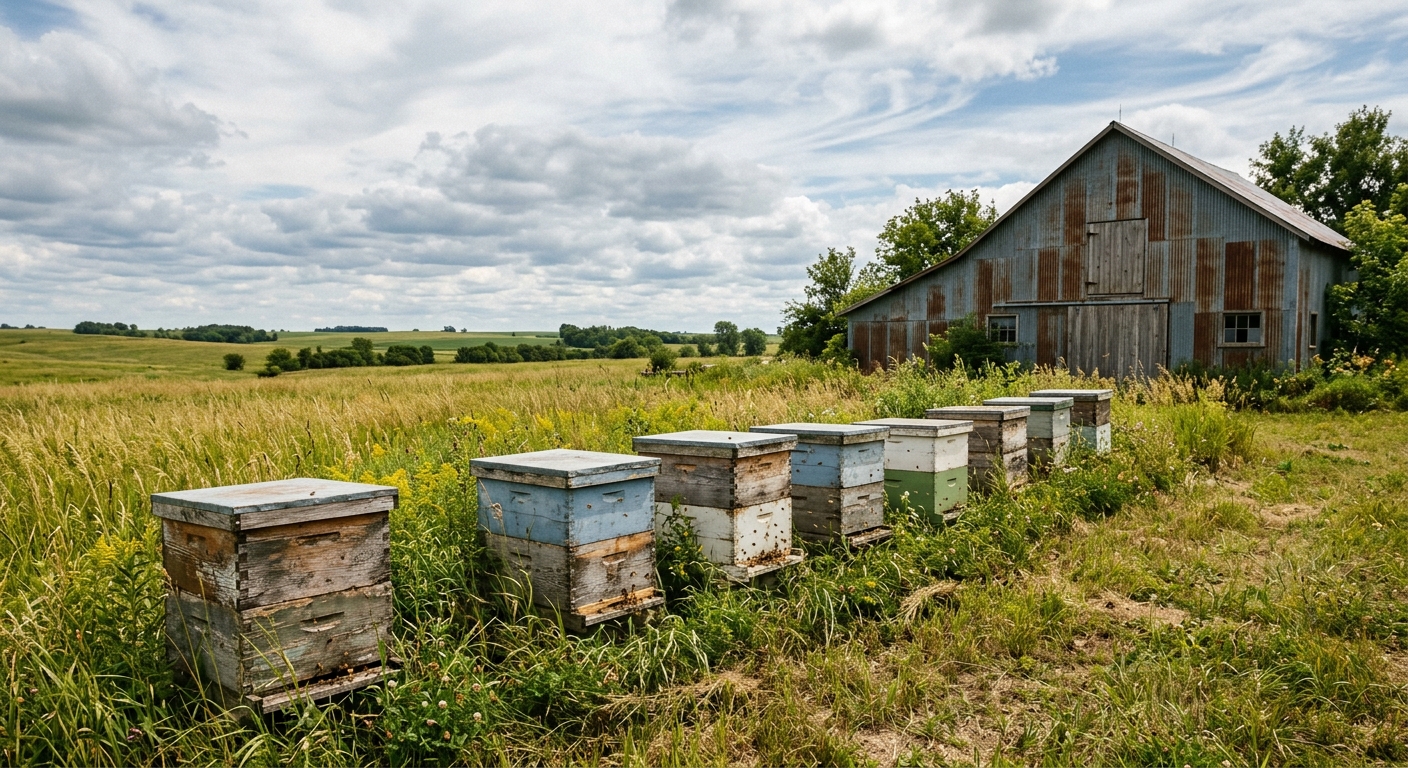
AI-generated illustration; not a photograph of the reported event.
- calendar_today October 19, 2026
Alberta's Agri-Food Sector Braces for Impact from Immigration Referendum
Alberta's agriculture producers and the temporary foreign workers essential to their operations are closely monitoring the outcome of Monday's provincial referendum. With five out of ten ballot questions centered on immigration policy, stakeholders in the agri-food sector are concerned about potential implications for their workforce and business viability.
Referendum Focuses on Immigration Policy Changes
The referendum gauges public opinion on matters such as service fees and health-care waiting periods for non-permanent residents. Given Alberta's dominance in Canadian beef processing and its production of about a quarter of the nation's farm revenue, industry leaders worry that changes affecting temporary foreign workers could worsen existing workforce challenges.
Kevin Nixon, the owner of Nixon Honey Farm in Red Deer County, emphasized the critical role of temporary foreign workers in his operations. "We would not be able to do what we do without the foreign workers. That's the bottom line," Nixon said. He noted that managing his farm's 12,000 beehives requires specialized expertise and physically demanding labor, skills that are often difficult to recruit locally. Each year, Nixon relies on roughly 20 experienced workers from Mexico to help produce over 680,000 kilograms of honey.
Beef Processing Relies on Foreign Labour
In Brooks, Alberta, the JBS Foods facility stands as one of the largest beef-processing plants in the country, processing approximately 4,800 cattle per day. Union representative Adriana Salguero pointed out that about 400 temporary foreign workers occupy demanding positions in the plant, often in jobs passed over by local workers. She described the physically intensive and sometimes dangerous nature of deboning and meat processing tasks, which rely heavily on experienced foreign workers.
Salguero noted that the immigration policy questions in the referendum have caused anxiety among workers, raising issues of fairness. "How can we ask people to contribute to our economy and to our communities, while making them feel that they have different opportunities than the other people, but they are required to contribute the same as everybody," she asked.
Systemic Uncertainty and Broader Economic Impacts
Policy analyst Ohi Ahmed warned that referendums of this nature introduce political uncertainty, which could ultimately hinder agricultural productivity in Alberta and the rest of Canada. Ahmed cited a 2022 Canadian Agricultural Human Resource Council survey indicating that persistent labour shortages cost the national sector $3.5 billion in sales. With 40 per cent of Alberta's agri-food workforce projected to retire by 2030, Ahmed predicted an increased reliance on foreign labour in the province.
Aaron Stein, executive director of the Alberta Federation of Agriculture, expressed concern that potential labour disruptions would add to a list of existing challenges, such as rising prices for diesel and fertilizer, and trade tariffs. "Additional costs ultimately affect farm competitiveness. We're competing with the Brazils, the Australias, the USAs of the world on the international market," Stein said.
Government Position and Sector Concerns
According to a spokesperson for Alberta's Ministry of Jobs, Economy, Trade and Immigration, should voters back the referendum questions, the province plans to collaborate with employers and other groups to develop a system that better meets workforce needs. The ministry cited increasing pressure on health care and public services as a reason for reassessing immigration policies, while also aiming not to strain these systems further.
Meanwhile, a representative from Employment and Social Development Canada (ESDC) clarified that temporary foreign workers represent less than two percent of Alberta's total labour force. Still, primary agriculture remains exempt from federal low-wage temporary foreign worker cap reductions due to ongoing labour shortages.
Ongoing Debate Over Costs and Misconceptions
Back on his farm, Kevin Nixon addressed misconceptions about temporary foreign workers being "cheap labour," noting that expenses like housing, airfare, and transportation make hiring them costlier than hiring locally—but often necessary during critical harvest periods. He also explained that his farm provides private health coverage for seasonal workers who are ineligible for provincial health insurance.
Nixon stressed the broader importance of the issue, highlighting how honeybee pollination, supported by these workers, benefits other agricultural production. "It's about producing our food in our country," he said.
Source: cbc.ca.