
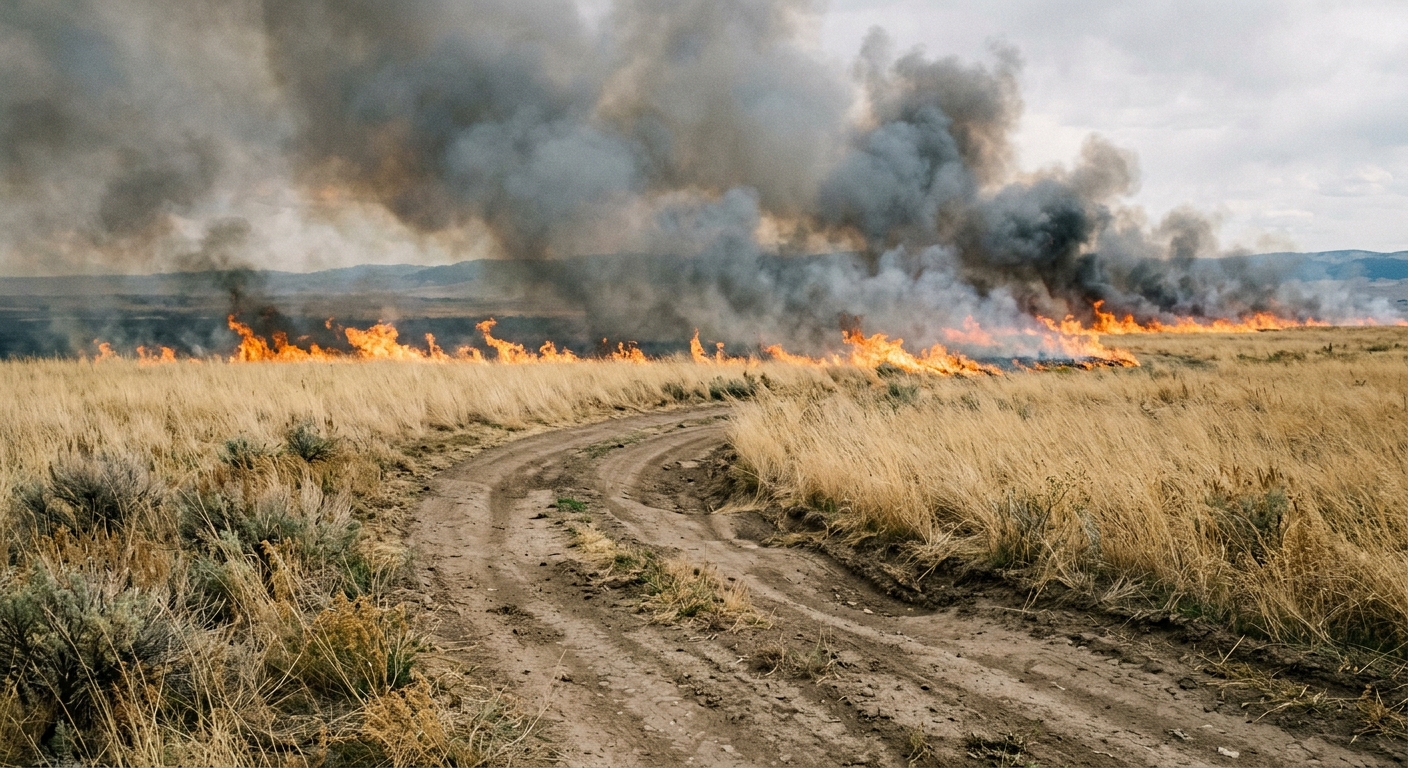
AI-generated illustration; not a photograph of the reported event.
- calendar_today October 20, 2026
Deadly Fire Erupts During Military Exercise at CFB Wainwright
On Saturday afternoon, a sudden and deadly wildfire swept through a military training exercise at CFB Wainwright in east-central Alberta, resulting in the deaths of four soldiers and serious injuries to dozens more. According to weather and wildfire experts, a rare combination of extreme conditions contributed to the rapid spread of the blaze.
Weather Alerts and Forecasted Risks
Earlier that day, Environment Canada issued yellow alerts for much of southern and eastern Alberta due to forecasts of strong winds—potentially reaching 100 km/h—and an advancing cold front. These conditions posed risks of abrupt wind direction changes. Temperatures in Wainwright rose to nearly 20°C under sunny skies before the front arrived, creating dry conditions favorable for fires.
How the Weather Fueled the Blaze
Mike Flannigan, a wildfire professor at Thompson Rivers University, noted that by around 2 p.m. on satellite data, a fire was already burning near the base. The Canadian Forest Fire Weather Index indicated that wildfire conditions across the Canadian prairies, including eastern and southern Alberta, ranged from very high to extreme. The arrival of the cold front around 4 p.m. brought a 10°C temperature drop and a dramatic wind shift, pushing the fire toward the training zone.
Rapid Fire Spread During Exercises
Major-General Wade Rutland of the Canadian Armed Forces said Sunday that the fire began as a grass fire and spread swiftly when the wind shifted. During the incident, soldiers were using hand grenades and participating in a 'section attack' exercise. Rutland explained that base officials were aware of the fire for several hours but permitted training to continue temporarily. The fire reportedly traveled one kilometer in just 36 seconds, with flames quickly approaching troops in training.
Rutland described the fire's movement as “uncommon” and rapid. Despite wind gusts below 50 km/h earlier in the day—considered within standard operating procedures—he underscored the unusual quickness and proximity of the advancing flames.
Why the Fire Spread So Fast
Wildfire and meteorological experts stated that the mix of dry ground fuels, low humidity (about 20%), and formidable wind gusts made for an extremely dangerous setup. AccuWeather chief meteorologist Jonathan Porter confirmed that his company had warned clients in the Wainwright area about high wind risks by around 2:30 p.m. Meteorologist Flannigan added that abundant grass growth in spring, now dried, provided significant fuel for fire to spread rapidly with the fall winds.
Speed Reports and Grass Fire Dynamics
While military sources reported the fire covering a kilometer in under a minute, Flannigan cautioned that such a pace is rare for grass fires unless unusual circumstances—such as merging fires or ignited unexploded ammunition—were involved. According to Natural Resources Canada, grass fires can travel up to 12 km/h and have flames reaching up to 10 meters in height. Fire speed is typically about 10% of the wind that drives it.
Ongoing Investigation into the Incident
The Department of National Defence confirmed that military police and the Canadian Forces National Investigation Service are investigating the Wainwright fire. Details remain under review, and officials have declined to provide specifics while the investigation is underway. Porter expects the investigation will scrutinize how well warnings about wind and weather were communicated and acted upon during the training exercise.
Military Protocol and Future Responses
Retired Major-General Scott Clancy explained that it's not uncommon for soldiers to continue exercises even as fires burn nearby, with range control officers managing such risks. He emphasized that investigations are likely to analyze leadership decisions, adherence to safety protocols, and the management of fire risks during field training.
Wildfire and weather experts voiced hope that this deadly event at CFB Wainwright will result in enhanced wildfire warning systems and greater military awareness of the dangers posed by grass fires, especially under extreme weather conditions.
Source: cbc.ca.


