
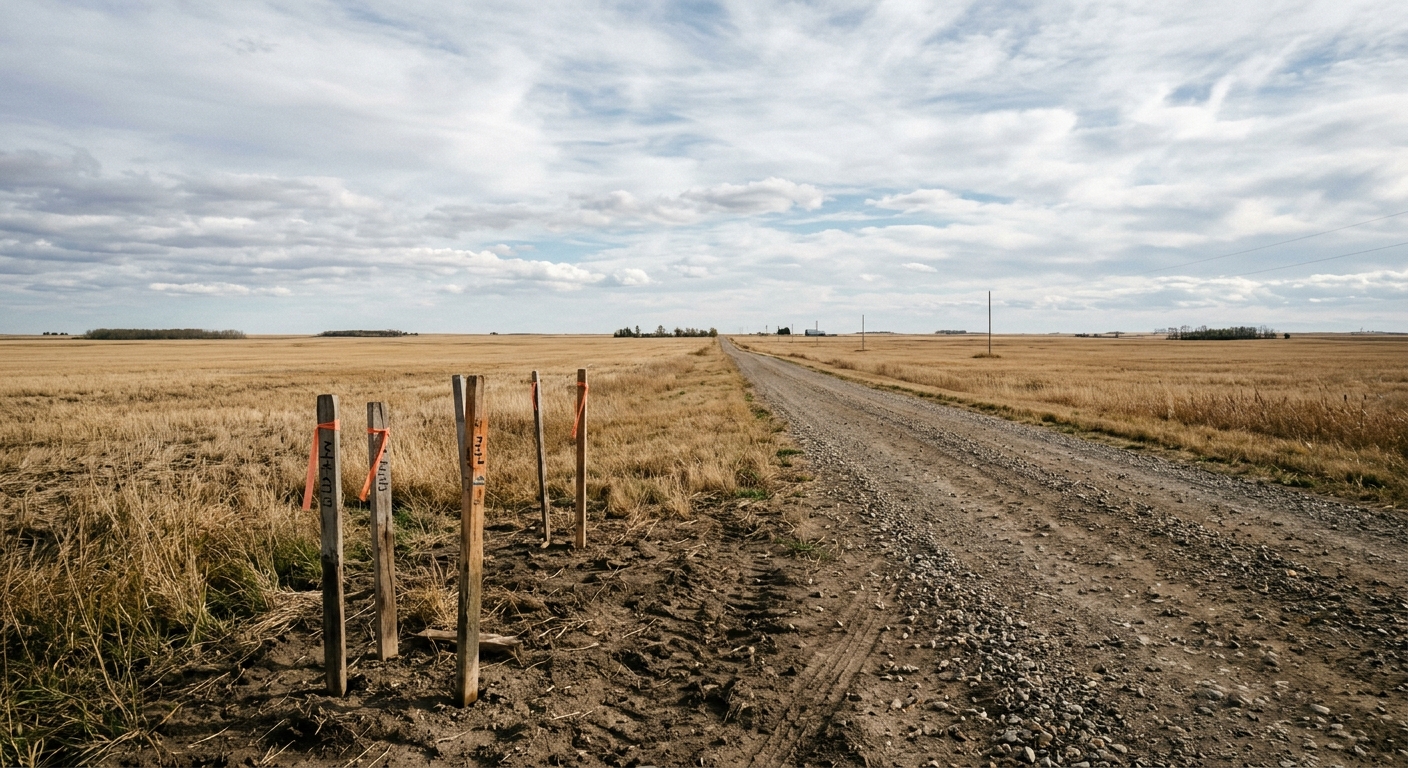
AI-generated illustration; not a photograph of the reported event.
- calendar_today October 26, 2026
AI Data Centre Proposal Targets Local Economic Revival
Eric Steeves, a fifth-generation farmer in Vulcan County, Alberta, has put forward an ambitious plan to build a large-scale AI data centre. The project, known as the Palliser Grid, is envisioned as a major opportunity for Steeves, his family, local farmers investing in the venture, and the wider community.
Rezoning Approval and Expansion Goals
In June, Steeves received municipal approval to rezone roughly 240 hectares from rural general to rural industrial use for the proposed facility. The site is located near Travers Reservoir, about 185 kilometres southeast of Calgary. Steeves hopes to initially develop a 50-100 megawatt data centre, ultimately expanding to 400 megawatts, with a long-term goal of scaling to one gigawatt.
To proceed, Steeves requires approvals from the Alberta Utilities Commission, Alberta Electric System Operator, and must obtain a Vulcan County development permit. He aims to start construction in May, with the project's first phase targeted for completion by the end of 2027.
Anticipated Economic Impact
Steeves believes the ai data centre could help reverse decades-long population decline in rural areas, which he attributes to a lack of local industry and jobs. The initial round of funding for the project came from over twenty area farmers, and Steeves is working to gather more local partners to own and operate the facility. While confident in attracting investment, he acknowledges the challenge of drawing workers to the area, though he hopes job opportunities will encourage people to relocate.
Environmental Concerns and Community Opposition
Despite these ambitions, the data centre project faces opposition from some residents and groups. The Little Bow AI Data Centre Committee, represented by member Brenda Hunik, argues that the site is among the province’s most productive agricultural lands and should remain farmland. Critics also worry about the environmental impact on Travers Reservoir and the proximity to the Little Bow Resort and Southern Alberta Bible Camp. Concerns include potential noise and light pollution, as well as skepticism about the promised economic benefits to the community.
The committee has initiated a legal challenge, seeking a judicial review of Vulcan County’s land rezoning decision. The hearing is expected to take place in the second half of 2027.
Developer and County Responses
Steeves has addressed some criticisms, noting that environmental studies report minimal sensitivities on the selected land, which he describes as having less productive soil. He also aims to design operations so noise at his parents' property 2.1 kilometres away will not exceed 35 decibels, with even lower levels expected at Little Bow Resort.
Vulcan County Reeve Jason Schneider declined to comment on the court proceedings but acknowledged that while the municipality has no specific data centre bylaws, it has received interest from developers. Schneider stated the county awaits provincial direction on the issue.
Provincial Policy Developments
Alberta government House Leader Joseph Schow recently indicated that new protections for data centre project development are under consideration, as part of a wider legislative package. Schow said the government would look at power consumption, grid stability, and water supply when assessing future data centre proposals, with the broader goal of attracting technology investment to the province.
Source: cbc.ca.





