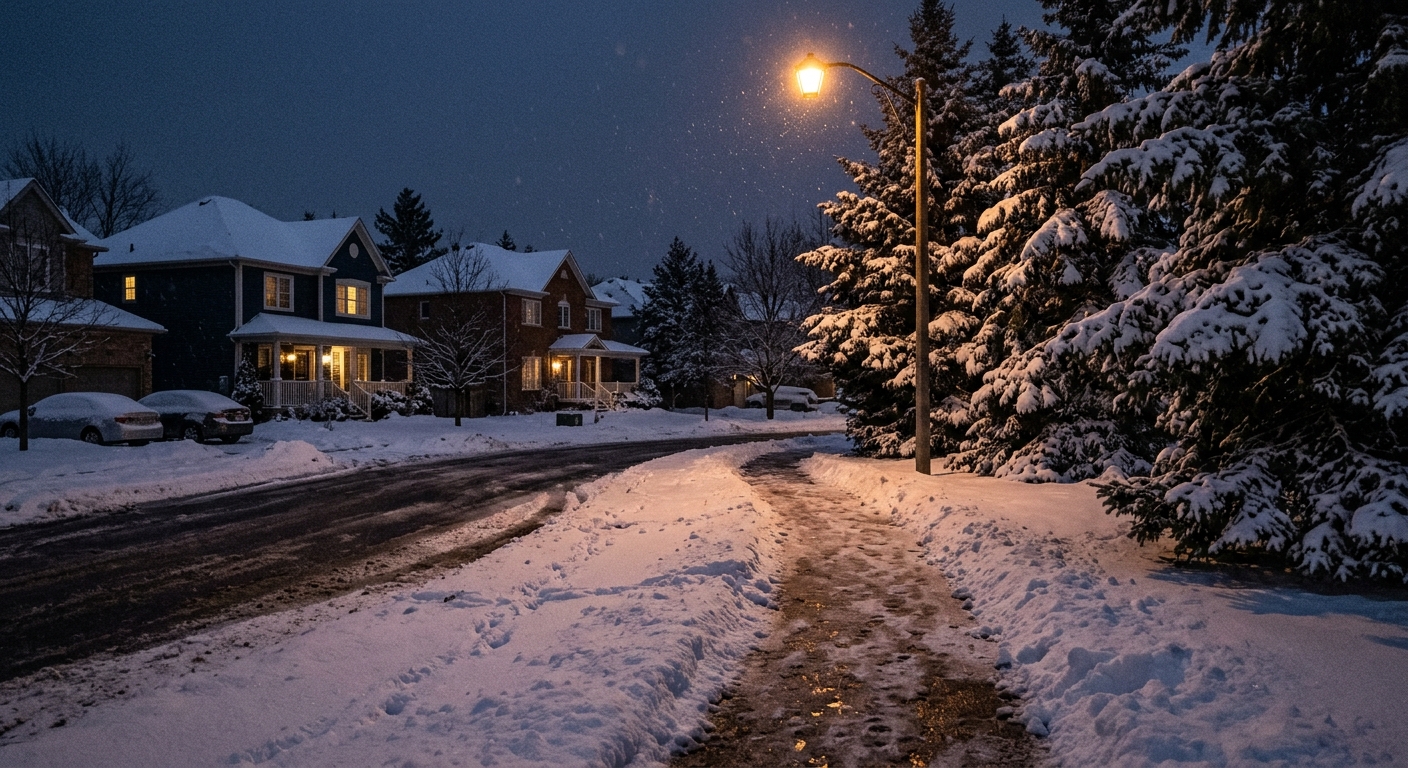
AI-generated illustration; not a photograph of the reported event.
- calendar_today October 31, 2026
Alberta Makes the Switch to Permanent Daylight Time
This weekend, Alberta will experience its first winter without falling back the clocks, as the province officially adopts permanent daylight time. After years of discussion and public debate, this move brings notable changes to daily life for residents, affecting everything from morning routines to local business operations.
Later Sunrises and Their Local Impact
By sticking to daylight time year-round, Alberta’s sunrises will occur later during the winter months. In Calgary, the shortest day of the year will see sunrise near 9:40 a.m., while in Fort McMurray it will be just after 10 a.m. As a result, mornings will remain darker for a longer period, which could impact those commuting to work or school before daylight.
Concerns for Drivers and Pedestrians
The Alberta Motor Association warns that drivers and pedestrians should be especially cautious during darker winter mornings. Divi Matharu, a senior instructor, advises motorists to stick to speed limits, check blind spots, and minimize distractions. Parents are encouraged to ensure children are visible by dressing them in bright or reflective clothing or giving them a flashlight for their morning commutes.
Effects on Transportation and Local Businesses
The province’s airlines, such as WestJet and Flair, have prepared for the transition. WestJet CEO Alexis von Hoensbroech expressed optimism, though he acknowledged the possibility that a few travelers may be late as they adjust to the new schedule. Flair has made small adjustments, but assures that flight times will remain in local time. Air Canada, accustomed to operating across different time zones, states that time changes are handled seamlessly within its scheduling systems. CPKC, a major rail operator, reports no operational changes needed for its trains.
The City of Calgary also confirms that there will be no changes to snow removal operations as a result of the time shift.
Ski Hill Schedules and Local Attractions Respond
Many ski hills in the Bow Valley are shifting their lift opening times to 9:30 a.m. to accommodate the later sunrise. Mount Norquay noted that this adjustment allows more time for staff to complete safety checks. WinSport’s Canada Olympic Park in Calgary, however, won’t change its 9 a.m. opening time, thanks to its lighting systems. The Wilder Institute/Calgary Zoo will run its winter hours from 10 a.m. to 5:30 p.m., and does not anticipate an impact on animal welfare, though the team will monitor conditions as needed.
Digital Calendar Issues Cause Scheduling Confusion
One unexpected challenge is potential confusion in digital calendars and booking systems, especially for appointments set after November 1. Some users have noticed events shifting by an hour, particularly in Google Calendar. Technology companies advise users to double-check their appointments and ensure their calendars are updated to reflect the correct time zone. Microsoft recommends updating both time zone settings and any recurring events within Outlook calendars.
Health and Circadian Rhythm Considerations
Dr. Michael Antle, a University of Calgary psychology professor, cautions that later sunrises may make it harder for some people to wake up. Research shows that populations with later sunrises have higher rates of obesity and heart disease. Dr. Antle would have preferred the province adopt permanent standard time, arguing that earlier daylight might better suit Alberta’s northern latitude and short winter days. He notes that other regions, including Russia, have previously abandoned permanent daylight time after trying it, suggesting Alberta may reassess the decision in the future.
Broader Time Change Trends in Canada
Alberta joins British Columbia, Manitoba, and the Northwest Territories in eliminating seasonal clock changes this year. Yukon and most of Saskatchewan have already made similar decisions, and Quebec is considering following suit next year.
Source: cbc.ca.