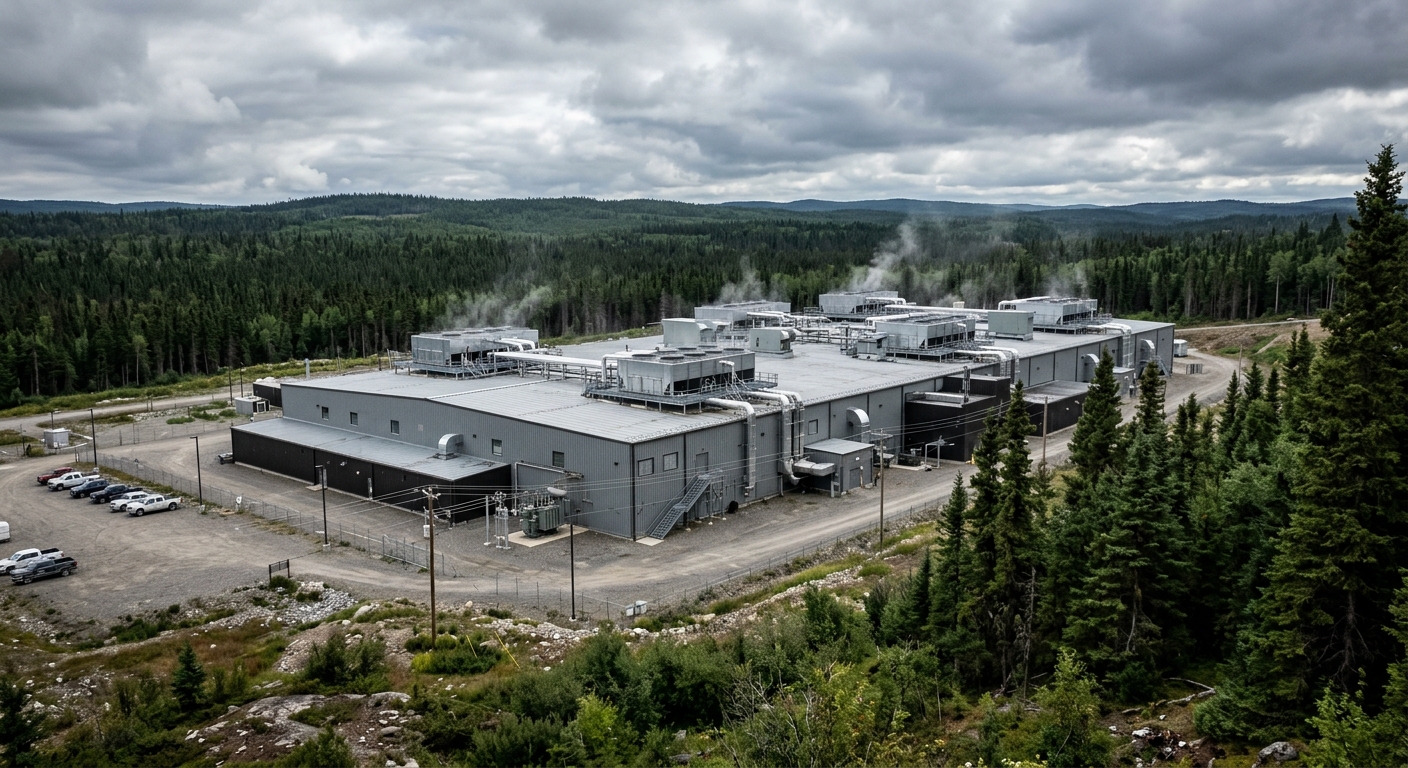
AI-generated illustration; not a photograph of the reported event.
- calendar_today November 1, 2026
Wonder Valley Data Centre Faces Environmental Scrutiny
A proposed data centre project in northwestern Alberta, backed by celebrity investor Kevin O'Leary, has drawn significant environmental concerns following a physicist's analysis. Robert Davies, a physicist at Utah State University, estimates the facility would release heat waste equivalent to 23 Hiroshima-sized atomic bombs each day into the local boreal forest.
Scope and Scale of the Proposed Project
The Wonder Valley data centre is a $70-billion project proposed by O'Leary Digital Limited for the Municipal District of Greenview, about 42 kilometres south of Grande Prairie, within the traditional territory of the Sturgeon Lake Cree Nation (SLCN). At full capacity, it could emit around 18 gigawatts of heat per day and roughly 30 million tonnes of carbon dioxide annually—amounting to more than four percent of Canada’s total emissions, according to Davies's preliminary assessment for SLCN.
Calls for Environmental Impact Assessment
Davies emphasized the unprecedented magnitude of the project, warning, “The effect will almost certainly be large, if not extreme.” He argued that existing environmental regulations were not designed to address developments of this size and advocated that a full environmental impact assessment (EIA) is necessary for the Wonder Valley data centre. “Permits check the parts. An assessment checks the whole. A project this size is exactly what assessments are for,” he stated.
Sturgeon Lake Cree Nation Seeks Legal Review
The Sturgeon Lake Cree Nation filed for a judicial review in September 2026 after the project was exempted from a provincial EIA. Last month, SLCN requested further judicial review to demand broader consultation before the data centre progresses. SLCN’s lawyer, Orlagh O’Kelly, pointed out that the scale of Wonder Valley necessitates more comprehensive discussion and oversight. Chief Sheldon Sunshine stated that the community’s experience with the project has been difficult, contrasting it with more productive relationships they have built with other resource developers.
Provincial Response and Industry Perspective
The Alberta Ministry of Environment and Protected Areas responded that the legal process determined an EIA was not required, explaining the project uses standard power and water systems “that have been safely used in Alberta for decades.” The Ministry also stated that even without an EIA, proponents must still obtain all required permits and demonstrate the project’s safety before proceeding.
Representatives from O’Leary Digital assert they are engaging in consultation with Indigenous communities and respect Alberta’s regulatory processes. Greenview municipal officials echoed that environmental oversight and Indigenous consultation remain provincial responsibilities.
Continuing Legal Challenges
SLCN is engaged in additional legal proceedings with O’Leary Digital, following a dismissed company bid to strike down an earlier judicial review regarding consultation and water rights. O’Kelly characterized the process as “deliberately bifurcated and piecemeal,” requiring First Nations to use legal action to have their concerns addressed.
Source: cbc.ca.