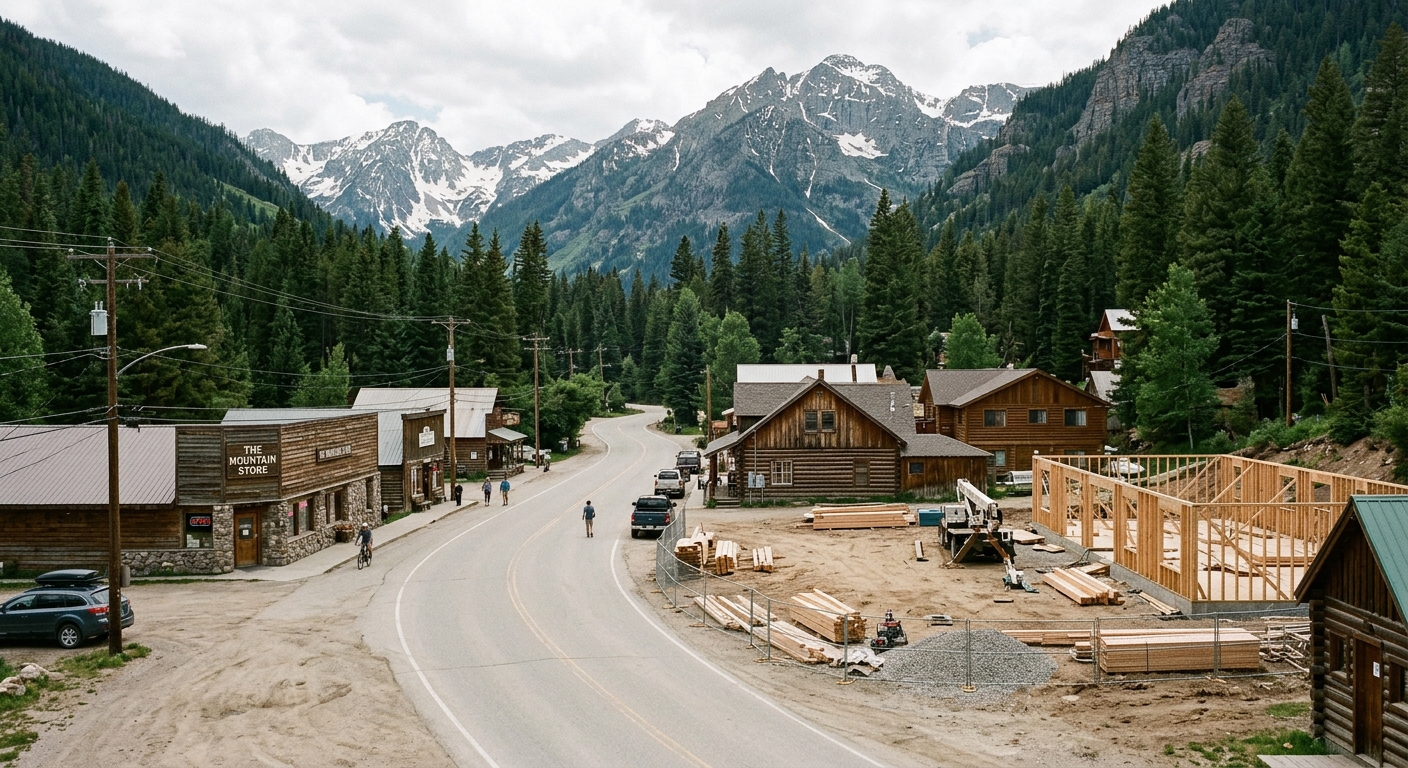
AI-generated illustration; not a photograph of the reported event.
- calendar_today November 3, 2026
Jasper Moves Closer to Controlling Land-Use Decisions
After decades of advocacy, the municipality of Jasper is on track to take over land-use authority from Parks Canada. This transition is intended to make planning and development processes more streamlined, transparent, and accessible for Jasper residents.
Historic Campaign for Local Planning Control
Jasper, unique as a municipality within a national park, has operated under a different governance model compared to other Alberta communities, including Banff. Since the mid-1990s, Mayor Richard Ireland has campaigned for the community to manage its own planning and development functions—powers already granted to most Alberta municipalities under the Municipal Government Act, except Jasper, which lacks control over Part 17 (planning and development).
When Banff incorporated in 1990, its deal with Parks Canada allowed the local council to draft its own land-use bylaw. The rapid growth and commercialization that followed, including projects like Cascade Plaza, led to criticism and shaped Parks Canada's approach to Jasper. Banff’s first mayor, Leslie Taylor, notes that Parks Canada, not the municipality, had approved major developments prior to Banff’s incorporation, but public perception has often held the municipality responsible. This perception influenced Jasper’s lack of planning authority for years, as Parks Canada resisted another rapid development scenario.
Addressing Accountability and Community Involvement
Mayor Ireland is confident that Jasper will avoid the pitfalls attributed to Banff, in part due to its different geographic pressures and the lessons learned. He emphasizes the importance of direct accountability to residents for maintaining the balance between development and the natural environment. Beth Sanders, director of urban design and standards for the municipality, believes residents will gain more input into decisions shaping their community once local control is established. Initially, Jasper will inherit Parks Canada’s current policies, with changes possible through its own council processes over time.
Ongoing Constraints and Rebuilding After Wildfire
Even with new powers, Jasper will remain subject to national park restrictions. The town's boundaries cannot expand, and commercial floor space is limited to 118,222 square metres by the Canada National Parks Act. After the 2024 wildfire that destroyed a third of Jasper’s townsite and prompted two hotels to absorb the remaining allowable commercial space, questions over local planning control gained new urgency. Federal and municipal leaders are now working to densify existing spaces and address the chronic zero per cent vacancy rate. Recent regulatory changes by Parks Canada have enhanced fire resiliency and streamlined permitting, reducing average wait times to 24 days.
Mayor Ireland reflects on whether local control might have better equipped Jasper to manage risks, such as the decision to allow cedar shake roofs, which were affected during the wildfire. While recent rebuilding has brought rapid policy shifts, Ireland suggests that local control would have allowed for more proactive, long-term planning.
Next Steps Toward Full Transfer of Powers
The legislative foundation for this shift was laid with the 2024 amendment to the Canada National Parks Act through Bill C-76. The full transfer of authority depends on finalizing an agreement between Parks Canada and the municipality regarding responsibilities. Mayor Ireland hopes for an agreement by spring 2027 and aims to see the process completed within three years. Until then, Parks Canada will continue issuing development permits while Jasper prepares to assume operational control. Preparing the municipal department to handle these new functions may entail additional costs and could result in property tax increases.
For Mayor Ireland, the value lies in local democratic accountability. "Control over land use and planning is absolutely fundamental to accountability at the local level and how your community grows," he said.
Background
This update was reported by Maggie Kirk for CBC News in Hinton, Alberta.
Source: cbc.ca.