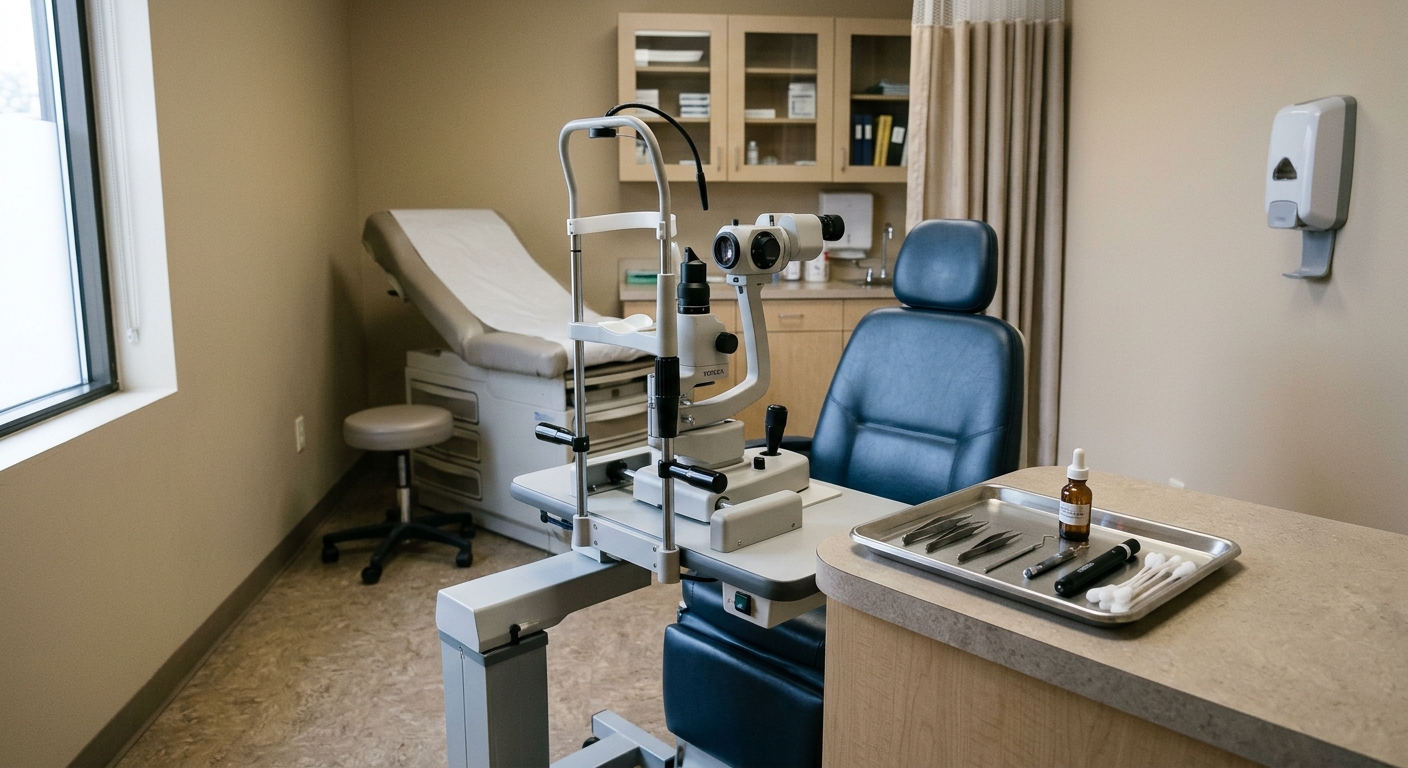
AI-generated illustration; not a photograph of the reported event.
- calendar_today November 6, 2026
Alberta Introduces Expanded Role for Optometrists
As of November 1, Alberta has become the first province in Canada to allow optometrists, following further specialized training, to perform specific minor surgical and laser procedures in-office. This regulatory change, announced by the provincial government on October 26, grants qualified optometrists the ability to perform services such as removal of benign skin lesions, treatment of styes, and certain laser procedures for cataracts and glaucomas.
Government Cites Improved Access to Eye Care
Provincial officials say that the expansion of optometrists’ capabilities aims to improve patient access to advanced eye care services. According to a government statement, “Eligible patients will be able to receive more advanced eye care from an optometrist without being referred elsewhere for those services.” By increasing the number of medical professionals authorized to provide these procedures, the province hopes to enhance care especially for patients in rural and remote communities, potentially reducing wait times and the need to travel to larger urban centers.
Mandatory Training and Regulatory Oversight
To perform the newly authorized surgical procedures, Alberta optometrists must complete additional education and clinical training, including passing examinations and undergoing clinical supervision. The Alberta College of Optometrists (ACO) will establish new standards of practice and provide oversight. Only those who meet these requirements will be permitted to offer the expanded services.
Medical Community Raises Patient Safety Concerns
Despite the potential benefits highlighted by the government, some medical groups have expressed reservations about the new rules. The Canadian Ophthalmological Society (COS), representing eye surgeons, has called for the reversal of the decision. Colin Mann, COS’s chief of advocacy and a former president of the society, voiced concerns regarding the adequacy of training and patient safety, stating: “I worry that patients may not receive treatment by someone with the appropriate training needed to do that treatment. Surgery needs to be done by surgeons.”
Mann questioned whether a short period of training is sufficient to prepare optometrists for surgical procedures, emphasizing, “You just can’t learn surgery in the equivalent of a week, or two weeks, or a number of weeks.”
Government Response and Continuing Discussions
Alberta’s Minister of Primary and Preventative Health Services, Justin Wright, addressed concerns at a recent news conference, reiterating that patient safety remains a priority and that barriers to care, not standards, are being reduced. He added that ophthalmologists will continue to provide these services as well, with the intention that specialists can focus on more complex eye care cases.
The ministry did not provide specific evidence regarding current barriers to care or access issues, but maintained that the changes are “about recognizing the skills of qualified health professionals, strengthening our health system and ensuring Albertans can access the care they need, closer to home.”
Mixed Views in Canada and Abroad
The Canadian Association of Optometrists has expressed support for Alberta’s move and signaled interest in expanding similar services nationally. Other countries, including parts of the United States, the United Kingdom, and New Zealand, permit optometrists to perform certain surgical procedures. However, the American Academy of Ophthalmology, similar to the COS, does not support the practice in the United States, citing concerns about effectiveness and access improvements.
Looking Ahead
As Alberta begins implementing these changes, the debate between expanding optometrist roles and ensuring robust training and safety standards continues. The coming months will reveal the impact on patient access to eye care and whether safety concerns raised by medical organizations are validated in practice.
Related coverage
Source: cbc.ca.