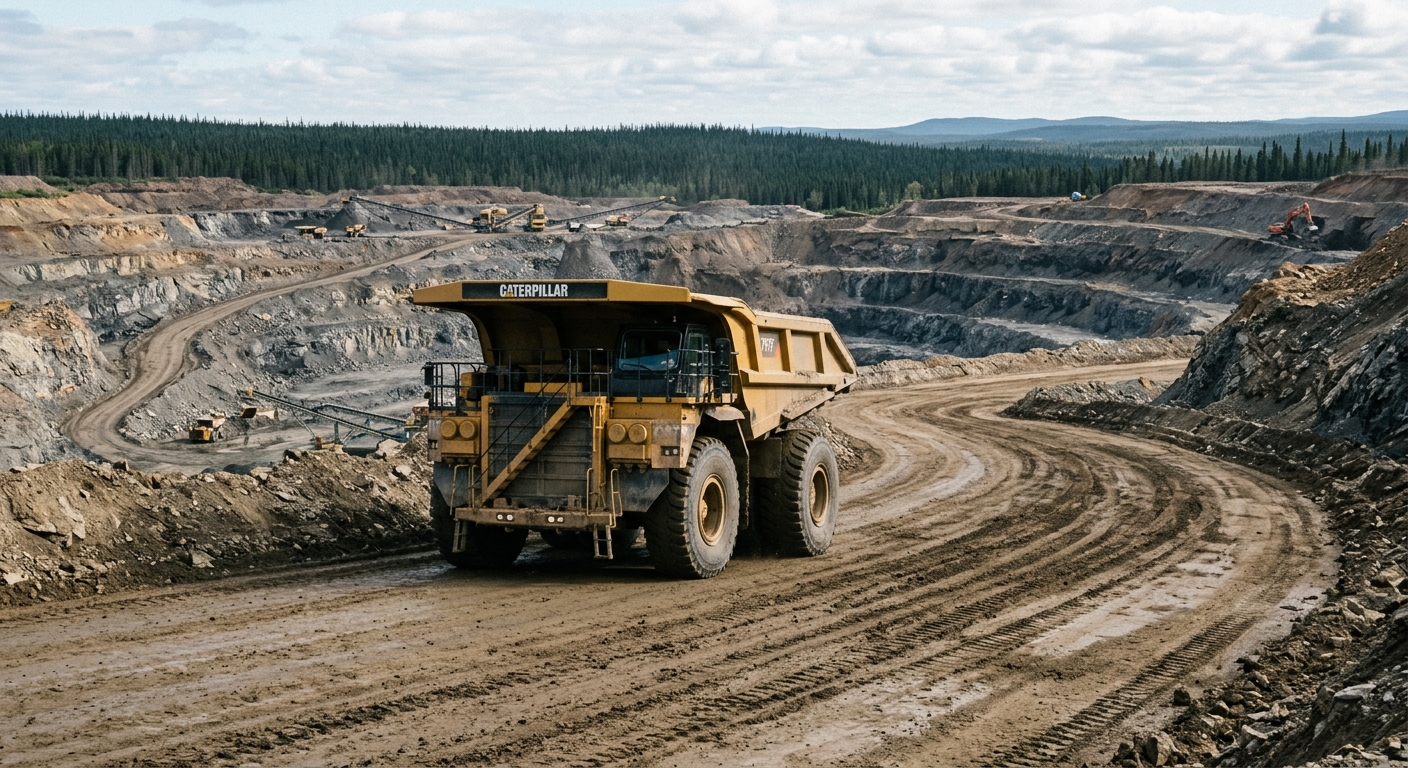
AI-generated illustration; not a photograph of the reported event.
- calendar_today November 9, 2026
Autonomous Vehicles Take Hold in Oilsands Mining
Oilsands mining companies operating in the Fort McMurray region are rapidly adopting autonomous vehicles and related automation technology, signaling a significant shift in how mining operations are conducted. Major producers and technology developers are advancing these systems to improve productivity and worker safety, while also navigating changes to the regional labor force.
Widespread Adoption Among Oilsands Producers
Suncor Energy has transitioned all ore transport at its Base Plant to autonomous haul trucks, according to a company news release. Imperial Oil completed the conversion of 81 haul trucks to autonomous operation in 2023. The emphasis on automation extends to other industry players, with investments in further developing the technology continuing across the region.
According to Epiroc, a mining equipment manufacturer with operations in Sudbury, Ontario, and represented by Seth Patterson, business manager for technology and automation products, the growth of autonomous vehicles in mining has been exponential over the past decade. Epiroc provides automation kits that can retrofit existing machines—including bulldozers, shovels, and excavators—up to different levels of autonomy, from operator-assisted line-of-sight control to full fleet automation managed from centralized control rooms.
Enhancing Safety and Productivity
Samuel Frimpong, a professor at Missouri S&T specializing in mining and explosives engineering, has published research examining how automation, robotics, and artificial intelligence are impacting workforce development in mining. His study, published in August in the journal Mining, highlighted the substantial improvements in safety and health for operators, especially in hazardous work environments such as those found in Fort McMurray.
Alberta's Occupational Health and Safety department reports 27 work-related fatalities in oil and gas over the past decade, but notes there have been no deaths involving autonomous vehicles in mining operations during that period.
Impacts on the Workforce and Skilled Trades
With the shift towards autonomous haul trucks and equipment, concerns have arisen about job losses. Frimpong notes, however, that many employees have been retrained for roles in maintenance, development, and communications, all of which remain necessary for autonomous operations—skills that are typically more specialized.
Gil McGowan, president of the Alberta Federation of Labour, acknowledges a significant decline in the number of workers on oilsands sites over the past decade. While automation is not the sole cause, it does play a meaningful role, particularly in displacing high-paying truck driving positions. New roles in infrastructure and maintenance are being created, but McGowan stresses that these may not offer the wages or require the same skillsets as the traditional jobs lost.
Seth Patterson at Epiroc projects an increased demand for tradespeople who can install, maintain, and service autonomous platforms, highlighting the evolving workforce requirements driven by technology adoption.
Recent Technological Advances
Suncor introduced an autonomous operating zone at Syncrude Mildred Lake in August, launching 19 autonomous trucks with plans to expand to 40 by the end of the year. The company stated that autonomous haul systems are improving consistency, productivity, and efficiency across operations. Notably, Suncor has worked closely with manufacturers to tailor advanced technologies like "Mud Mode" to help vehicles operate reliably in extreme weather.
Lisa Schmidt, communications manager for Esso, indicated that the introduction of 81 autonomous haul trucks at Imperial Oil’s operations in 2023 led to improvements in worker safety and a 20 percent productivity increase.
The Future: Innovations in Autonomous Inspection
Quamrul Huda, an industrial automation researcher at NAIT, reports that all major players in the region are aggressively adopting these technologies. Despite the progress, Huda points out that manual intervention is still required to fuel and inspect the autonomous vehicles—creating some operational bottlenecks.
To tackle this, Huda's research team developed a mobile robot capable of inspecting autonomous vehicles and producing rapid health reports. The prototype is now being commercialized, and Huda anticipates further adoption of such systems over the next decade, making mine operations even more reliant on automation.
Looking Ahead for Oilsands Mining
Industry experts agree that automation provides a compelling business case for companies facing challenging working conditions. “The industry is changing. We are on a path toward the mine of the future, and we need to get on board in terms of looking at the future workforce, looking at investments that may lead us there,” said Frimpong.
Source: cbc.ca.