- calendar_today August 12, 2025
.
For more than 20 years, Washington and New Delhi had what was long considered one of the most successful strategic partnerships of the post–Cold War era. Today, the trust that took so long to build is being eroded amid tariff and oil disputes, and the two countries are drifting apart.
“The basic fact of the matter is we’re in a situation in the U.S.-India relationship where the premises and assumptions of the last 25 years — that everybody worked very hard to build, including the president in his first term — have just come completely unraveled. The trust is gone,” Evan Feigenbaum, a South Asia analyst at the Carnegie Endowment for International Peace, said bluntly.
India is pivoting toward Russia and China after Trump imposed major tariffs on Indian goods in June, partly because of New Delhi’s refusal to stop buying Russian oil. The tariff began at 25 percent earlier this month and will rise to 50 percent on Aug. 27. Rather than pressure India to change course, Washington’s move appears to have pushed India even closer to Russia and Beijing.
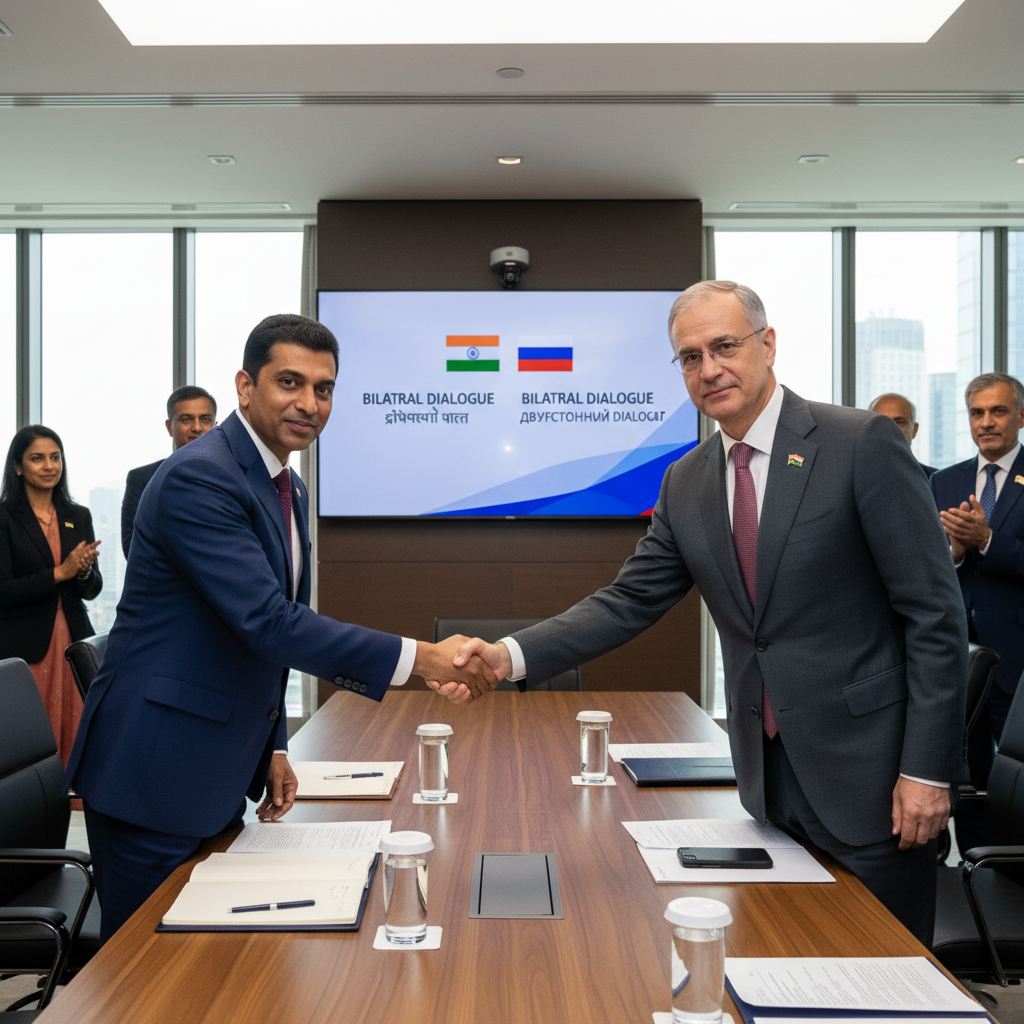
National security adviser Ajit Doval visited Moscow last week, and Indian Foreign Minister Subrahmanyam Jaishankar held talks with his Russian counterpart, Sergey Lavrov. Chinese Foreign Minister Wang Yi concluded meetings in New Delhi over the weekend. Prime Minister Narendra Modi is set to visit China for the first time in more than seven years, and Russian President Vladimir Putin will likely host him in Moscow before the end of the year. Kugelman said the moves go beyond optics.
India “feels that the U.S. is interfering and overstepping the boundaries of what they’re comfortable with when it comes to picking sides in this kind of great power competition,” Kugelman said. In public statements and social media, some Indians have even suggested that Washington was bribing countries to stop buying Russian oil, a reflection of domestic anger at the tariffs, he said. “They’re signaling very clearly that they view that as interference in India’s foreign policy, and they are not going to put up with it.”
India had reportedly paused Russian oil imports at the start of the war, but state-run refiners quietly restarted purchases after the Kremlin offered discounts of six to seven percent. Russia now accounts for 35 percent of India’s crude imports, up from just 0.2 percent before the Ukraine invasion. Deputy Prime Minister Denis Manturov said Russia is “ready to continue oil supplies, supplies of oil products, coal, thermal and coking, and also see potential for the export of Russian LNG.”
India’s Domestic Priorities
Feigenbaum and Kugelman said India’s outreach to Russia and China was driven not just by Trump’s tariffs, but also by New Delhi’s domestic politics. Kugelman, a South Asia expert at the Washington-based Wilson Center, noted that New Delhi has been signaling a desire to repair ties with Beijing for almost a year, largely for economic reasons. Trump’s policies toward India, however, have pushed New Delhi to accelerate its shift to the east.
“They want to be seen as not being dragged along and having some agency of their own,” Kugelman said. “That’s why they’re hitting the reset button. They want to be independent and have some of their autonomy.”
Some of the Indian moves were likely intended as a form of theater, said Feigenbaum, a former South Asia official at the National Security Council and U.S. State Department. But other elements of New Delhi’s actions — notably the commercial deals it is cementing with Moscow — were “not performative,” he said.
India’s defense and energy ties to Russia predate the Ukraine war. New Delhi had already been decreasing its dependence on Russian arms, for example, by diversifying with American, French, and Israeli platforms. But since the start of the war, energy trade with Moscow has picked up. Kugelman called it a “validation of a feeling in India that we can’t trust the U.S. and that Russia can — because Russia is always going to be there for India no matter what.”
That line has played well at home, where Modi is using his energy purchases to bolster his credentials as a stalwart defender of India’s sovereignty. He has also emphasized the need to protect farmers, small businesses, and young workers from harm — a popular message within India’s vast population. Kugelman noted that India had already made important concessions to Washington in the past, including tariff reductions and the repatriation of migrant workers. “Because of those concessions, India needs to be careful about signaling further willingness to bend. This is one reason there was no trade deal — Modi put his foot down,” he said.
The U.S. side is growing impatient, with White House trade adviser Peter Navarro writing in the Financial Times that India’s oil purchases were “opportunistic” and “deeply corrosive to the U.S.-India relationship.” He added that tariffs were necessary to target “Indian imports where it hurts — its access to U.S. markets — even as it seeks to cut off the financial lifeline it has extended to Russia’s war effort.”
Indian experts note that the relationship has soured despite numerous high-profile achievements in the past two decades. The 2008 U.S.-India civil nuclear deal, for example, was one of the most significant breakthroughs in the bilateral relationship. It gave India access to U.S. fuel and nuclear technology despite its refusal to sign the Non-Proliferation Treaty and raised the possibility of closer defense ties.