- calendar_today August 27, 2025
By 2030, AI will affect almost 50% of Alberta’s labour market. Here’s how the province’s labour market is gearing up for the change.
Alberta’s Labour Market at a Crossroads: AI to Change 50% of Jobs by 2030
Artificial Intelligence (AI) is rapidly becoming a driving force in how businesses operate—and Alberta’s job market is no exception. By 2030, nearly half of all jobs in the province could be transformed or replaced by AI, according to forecasts from global economic organizations. From the oil sands of Fort McMurray to tech startups in Calgary, this seismic shift is expected to touch nearly every industry.
As technology gets smarter and more powerful, Albertans are being met with disruption as well as opportunity. The future of work is shifting—and how successfully the province responds will decide if workers are left behind or launched into new jobs.
Jobs Most Exposed to AI in Alberta
The types of jobs most vulnerable are those that require repetitive or routine work. Alberta’s economy, though varied, consists of various sectors that are bound to experience widespread automation:
- Oil and gas operations – AI is simplifying data analysis, equipment monitoring, and safety procedures, minimizing the need for human supervision.
- Administrative and clerical tasks – Numerous back-office positions, like data entry and scheduling, are being automated with AI-powered software.
- Retail and hospitality jobs – From automated checkout machines to AI-powered reservation systems, less labor is required in front-of-house positions.
- Transportation and logistics – Driverless trucks and AI-controlled supply chains are transforming Alberta’s transportation industry.
Though these occupations will shrink in terms of numbers, they will not disappear. Rather, they will be asking for new skills and higher digital literacy.
Where AI Is Creating Opportunities
Luckily, Alberta is not only experiencing job loss—it’s also poised for growth in industries where AI fosters innovation and streamlining. Some of the sectors forecasted to gain include:
- Technology and software development – As Calgary and Edmonton both become tech centers, there is increasing demand for AI experts, software developers, and IT support workers.
- Clean tech and environmental roles – With Alberta investing in sustainability, AI is being utilized to track emissions, regulate renewable energy, and enhance energy efficiency.
- Healthcare and diagnostics – AI solutions aid in anything from medical imaging to hospital administration, helping doctors and healthcare staff.
- Education and training – With workforce shifts on the increase, there will be a demand for education professionals to assist adults in upskilling and reskilling.
These industries indicate a new Alberta economy—a more digitally integrated and adaptable one.
Industry Highlight: Alberta’s Emerging Industries
- 1. Energy Industry
AI already begins to optimize drilling activities, operate pipelines, and forecast equipment failures before they occur. This doesn’t displace jobs but reorients the demand to technical and analytical positions that collaborate with AI systems.
- 2. Agriculture
Smart agriculture technology such as drones, sensors, and artificially intelligent crop monitoring is minimizing waste and increasing productivity. Farmers are now data experts and operators of machines.
- 3. Manufacturing
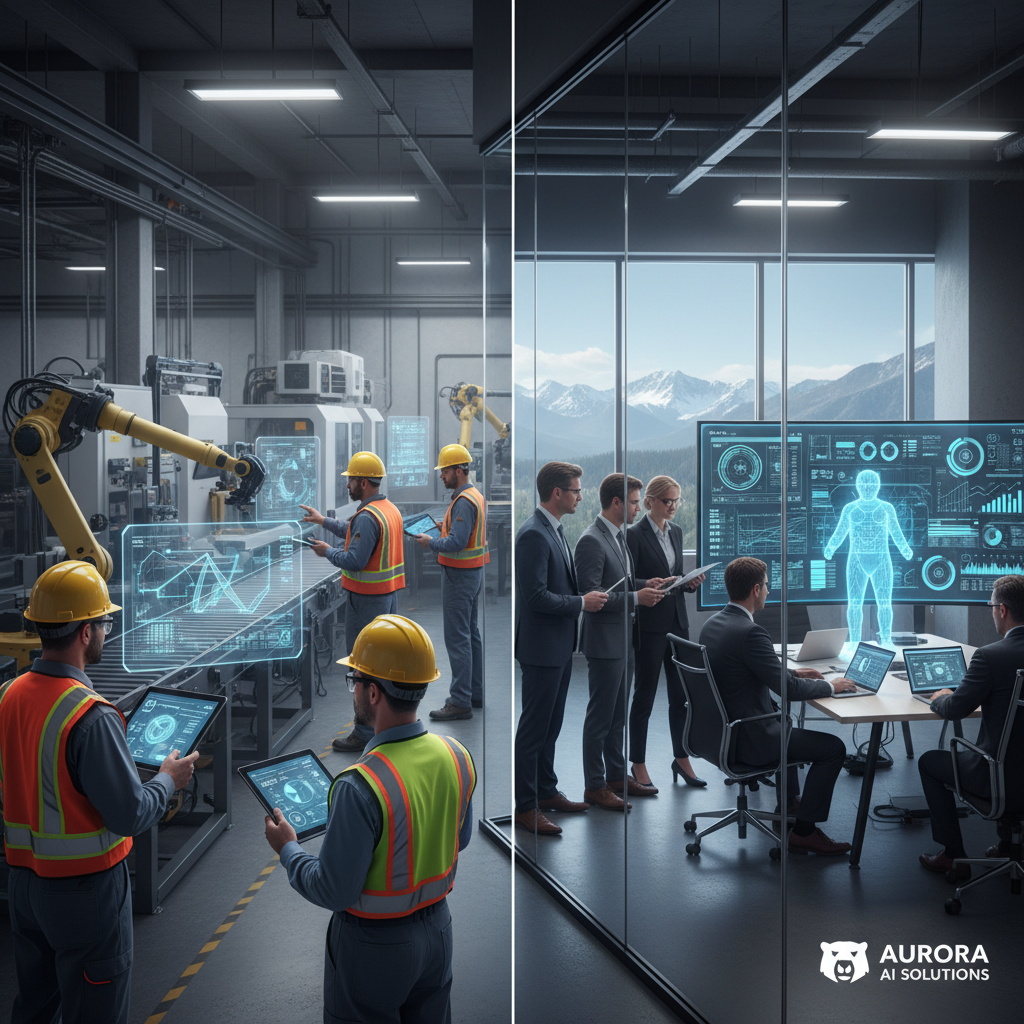
Factory automation in Alberta’s factories is making production more efficient. Employees are being retrained to operate robots, diagnose problems with the system, and maintain quality.
- 4. Logistics and Transportation
Alberta’s vast geography results in the goods traveling long distances. AI-enhanced delivery routes, warehouse operations, and fleet efficiency are creating new technical and oversight skills.
How Albertans Can Prepare for the AI Age
AI can be an amorphous threat, but readiness for its advent is realistic and doable. Here’s how Albertans can remain ahead:
- Upskill and Reskill
Short-term certificates in coding, data analysis, AI tools, and cloud computing can lead to new positions.
- Embrace Soft Skills
Leadership, emotional intelligence, and problem-solving are high-priority skills that are difficult to automate.
- Stay Agile
Employees who are flexible and adaptable will be better off in industries that change quickly.
- Discover New Industries
From clean energy to biotech, Alberta’s economy is diversifying. Being inquisitive and finding new industries can create successful careers.
The Employer and Government Role
An effective AI shift not only requires individual effort, but also help from institutions. Here’s what’s required:
- Workforce retraining initiatives – The government and business have to join hands to ensure learning is made accessible.
- Investment in digital infrastructure – High-speed Internet and cutting-edge tech equipment needs to be made readily available throughout urban and rural Alberta.
- AI ethics and inclusion policies – Mechanisms of protection should uphold the utilization of AI as equitable and advantageous for all workers.
With the proper help, Alberta can be a leading exponent of AI-driven innovation while safeguarding the livelihood of its citizens.
Alberta in 2030: Risks, Rewards, and Readiness
By 2030, the job market in Alberta will be much different. Certain jobs will narrow or vanish, but others will become stronger than ever before. The next decade is an opportunity to reimagine how we work, retrain if necessary, and reimagine our economy with AI as a tool, not a threat.
The question is not whether AI will transform Alberta’s workforce, but rather how Albertans will adjust. With education, grit, and forward-thinking planning, the province can prosper in an age of smart machines.