
- calendar_today August 14, 2025
Alberta’s real estate market in 2025 is balancing cautious optimism with strategic recalibration. As interest rates begin to stabilize, investors across Calgary, Edmonton, Red Deer, and smaller municipalities are shifting focus from short-term gains to longer-term value. Alberta’s relatively low cost of living, growing population, and energy-driven economy are creating opportunities in specific property sectors.
So, where are real estate investors concentrating in Alberta? Seven key asset types are standing out in 2025—adapting to shifting demand and showing resilience despite broader economic headwinds. These sectors are leading the way in both urban growth centers and suburban corridors across the province.
Multifamily Housing: The Resilient Mainstay
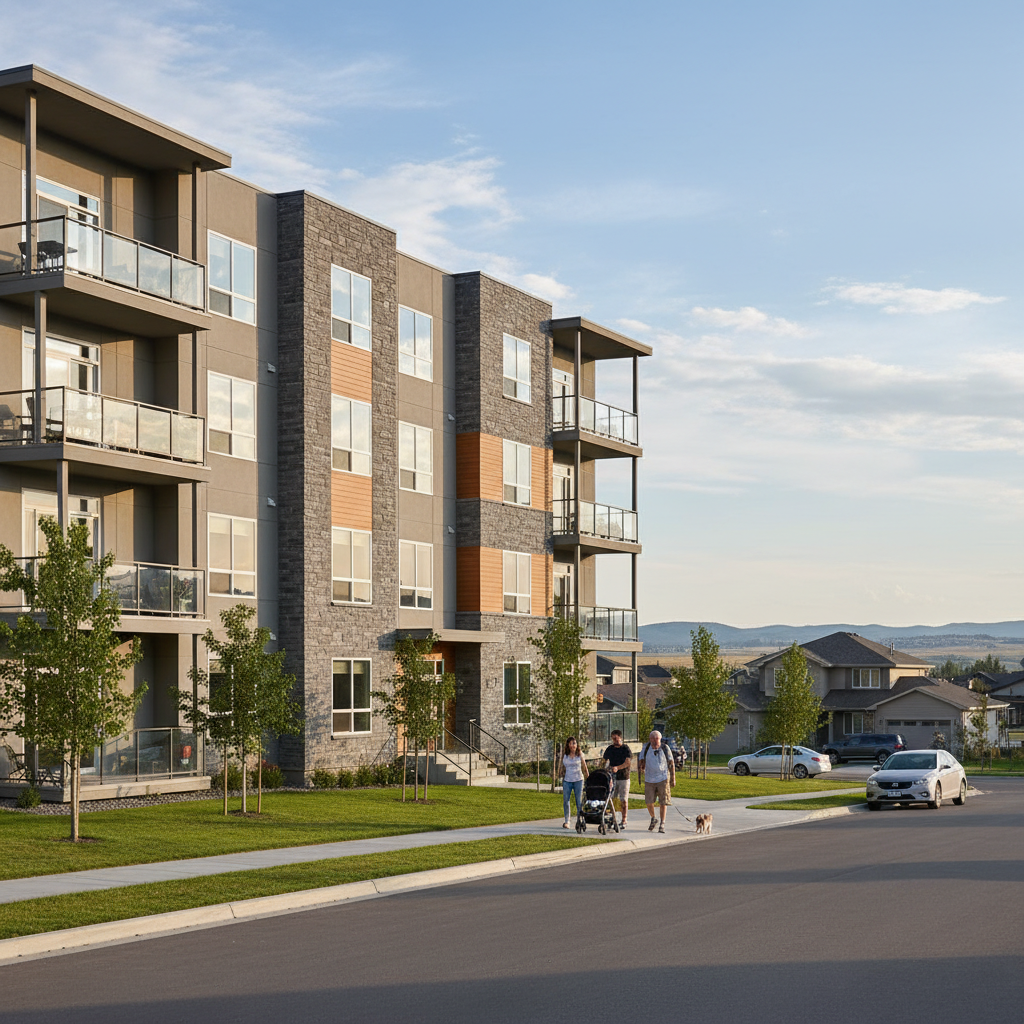
Multifamily properties remain foundational to Alberta’s residential rental landscape. In cities like Calgary and Edmonton, rising interest rates have sidelined many first-time buyers, extending demand for affordable apartment rentals. Class B and C multifamily units in neighborhoods such as Mill Woods, Forest Lawn, and Beltline are experiencing low vacancy and steady rent growth.
Mid-rise buildings and purpose-built rental communities are particularly attractive to both investors and tenants. In Edmonton, vacancy rates are down to 3.5% in select areas, while Calgary is seeing new rental developments fill quickly due to population influx. Modest unit upgrades and strong property management can yield consistent 3–4% annual rent appreciation even in balanced markets.
Industrial Properties: A Growing Alberta Asset
Industrial real estate continues to perform strongly across Alberta, thanks to increased demand for warehousing, distribution, and cold storage. Calgary and Edmonton are key logistics hubs for Western Canada, with excellent highway and rail infrastructure linking to Vancouver, Regina, and the U.S.
According to Colliers and Altus Group data, Alberta’s industrial vacancy has dipped below 4% in 2025, with average rental rates climbing. Demand is driven by e-commerce fulfillment centers, energy-related logistics, and food-grade storage. In places like Balzac (just north of Calgary) and Acheson (near Edmonton), large-scale industrial parks are attracting long-term tenants and institutional capital.
Single-Family Rentals in Growing Communities
Alberta’s expanding suburbs are proving ideal for single-family rental (SFR) investments. With affordability challenges persisting and many residents hesitant to buy, communities like Airdrie, Leduc, Okotoks, and Sherwood Park are seeing a surge in demand for detached homes available for rent.
Roofstock’s 2025 Canadian Investor Survey reports a rising number of investors entering the Alberta SFR market, citing dependable tenants and relatively low property taxes. These homes attract working professionals and young families drawn by access to schools, transit, and proximity to major employment zones.
Migration Patterns: Rural Growth & Interprovincial Gains
Alberta continues to be one of Canada’s top provinces for interprovincial migration. Families and individuals from British Columbia and Ontario are relocating for affordability, job opportunities, and quality of life. This trend is particularly visible in smaller cities like Grande Prairie, Medicine Hat, and Lethbridge, where real estate is still relatively undervalued.
Developers are responding by building residential and mixed-use projects near economic corridors tied to energy, agriculture, and logistics. While Calgary and Edmonton remain dominant, surrounding areas are gaining traction as alternative growth markets. Infrastructure spending and improving connectivity are further boosting investor confidence in these regions.
Mixed-Use Developments & Downtown Comebacks
Downtown revitalization is making a quiet but steady return across Alberta’s major cities. In Calgary’s Beltline and East Village, and Edmonton’s ICE District and Oliver, mixed-use projects combining residential, retail, and coworking space are drawing interest from tenants and investors alike.
These developments are tailored to a younger demographic looking for walkable neighborhoods, lifestyle amenities, and proximity to transit. Though construction costs remain high, long-term value is evident in areas where municipal support, zoning alignment, and tenant demand intersect. Smaller cities like Red Deer and Lethbridge are also exploring downtown renewal with repurposed commercial buildings turned into modern rental units.
Niche Assets: Student and Senior Housing
Alberta’s aging population and large student base are fueling demand for niche housing segments. Senior housing—especially independent living and assisted living—is growing in suburban areas of Calgary and Edmonton, as well as mid-sized communities with regional hospitals and services.
Meanwhile, demand for student housing is rising around institutions such as the University of Alberta, University of Calgary, and Mount Royal University. Pre-leasing is strong, with students preferring well-managed, fully furnished units that offer modern amenities. Developers are focusing on boutique student properties that combine social spaces, high-speed internet, and walkable access to campus.
Risks and Investment Considerations
Alberta offers strong fundamentals, but not without its risks. Insurance premiums are climbing in flood-prone regions near rivers and creeks, particularly in parts of Calgary. Investors must also consider the volatility of Alberta’s energy economy, which can impact employment and housing demand in specific areas.
Regulatory environments remain relatively investor-friendly compared to other provinces, though municipalities like Edmonton and Calgary are introducing short-term rental restrictions and tightening zoning in certain districts. As interest rates remain higher than pre-2022 levels, financing is a challenge for leveraged projects, making conservative underwriting more important than ever.
Expert Insight: What the Analysts Say
“Alberta’s resilience is rooted in migration gains and competitive cost of living,” says Lauren Bellingham, senior economist at CBRE Canada. “We’re seeing strong capital flows into multifamily, logistics, and suburban rentals—especially in markets with sustained job creation.”
Redfin’s 2025 Housing Trends Report for Canada echoes this, pointing to population shifts, affordability, and regional job growth as the driving forces behind Alberta’s appeal. Analysts emphasize the importance of localized knowledge and long-term trends over chasing short-term returns.
Diversification is Alberta’s Strength in 2025
In 2025, Alberta’s most successful real estate investors are leaning into diversification—placing calculated bets across sectors aligned with the province’s evolving demographics and economy. Multifamily remains a safe anchor, industrial is growing steadily, and SFRs are thriving in growth corridors outside major cities.
Mixed-use projects and niche housing types are gaining ground, especially where walkability and lifestyle intersect. And as Alberta benefits from both domestic and interprovincial migration, the gap between high-potential and low-performing markets is becoming more pronounced.
With deep regional knowledge and a flexible, forward-looking strategy, investors in Alberta have a strong opportunity to outperform in a market that rewards precision and patience.


