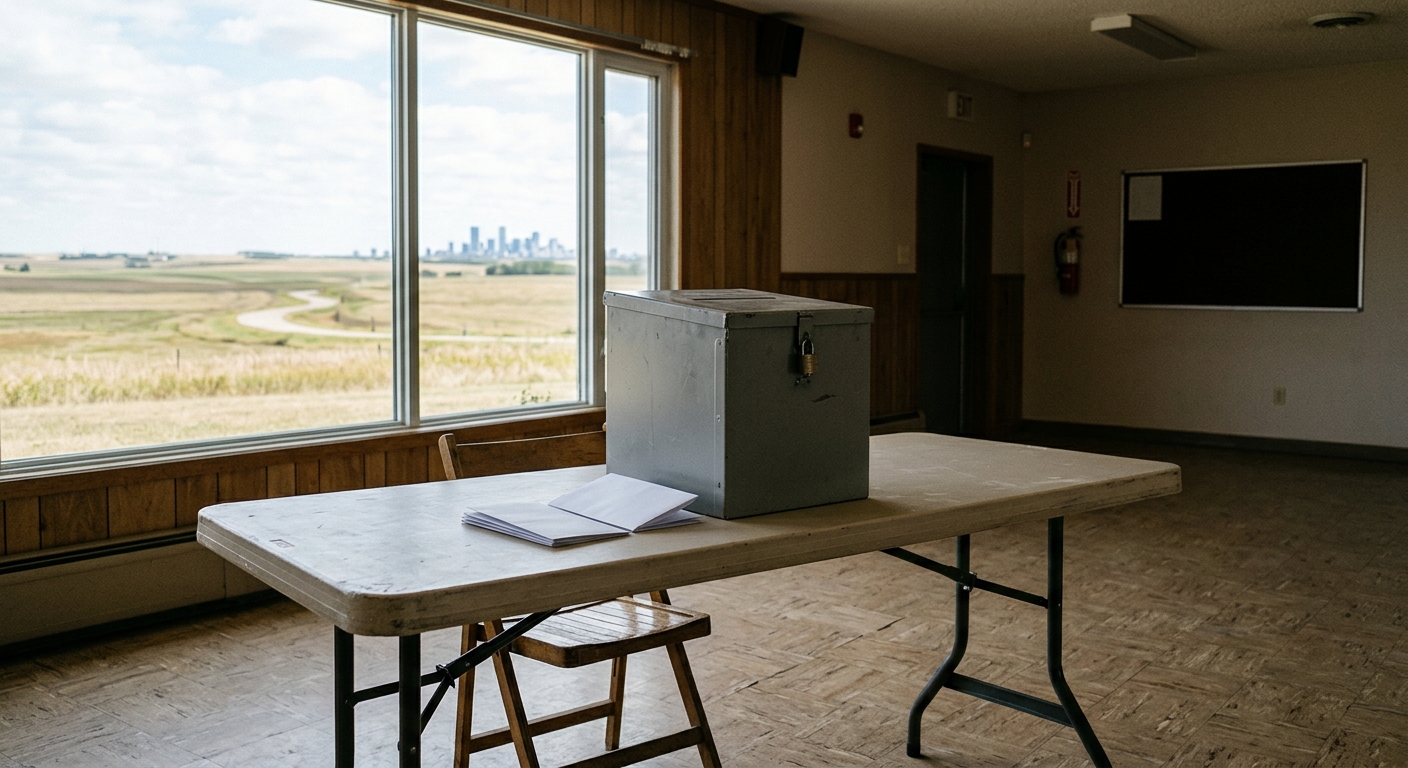
AI-generated illustration; not a photograph of the reported event.
- calendar_today October 26, 2026
Preliminary Referendum Results Indicate Rural-Urban Split
The ongoing count of referendum ballots in Alberta is revealing a significant divide between rural and urban voters on issues related to immigration and constitutional changes. Elections Alberta reported unofficial results on Saturday night, underscoring that rural areas largely supported proposals related to immigration and the constitution, while voters in Calgary and Edmonton appeared more divided or opposed.
Key Proposals and Voter Reactions
The referendum presented Albertans with several questions, notably referred to as "the nine," which covered topics ranging from immigrant rights to provincial involvement in constitutional matters. The first five questions focused on immigration and access to public services for non-permanent residents. The remaining four addressed constitutional changes, such as provincial authority over judicial appointments and potential abolition of the federal Senate.
According to Elections Alberta, rural support was instrumental in driving approval for questions 1 to 5. In contrast, urban voters in Calgary and Edmonton showed more resistance or ambivalence, especially towards questions concerning constitutional changes.
Expert Insights on the Rural-Urban Divide
Feodor Snagovsky, associate professor of political science at the University of Alberta, noted that the urban-rural divide is a consistent pattern in issues like immigration. Rural communities, which tend to lean more conservative, often support restrictive stances on immigration, in contrast to urban areas. Questions in the referendum addressed measures such as requiring proof of Canadian citizenship to vote in provincial elections and expanding provincial control over immigration — traditionally a federal responsibility.
Government Response and Political Implications
Premier Danielle Smith, speaking with CBC’s West of Centre podcast, interpreted the referendum outcome as a signal for her government to proceed cautiously with further policy changes. Smith stated that the referendum confirmed Albertans' greater concern for immigration policy over constitutional reform and announced that her government prioritizes addressing these concerns. She emphasized the importance of aligning economic migration with available job opportunities to relieve pressure on social services.
When challenged about the differing opinions in Alberta’s urban centers, Smith pointed to the province’s critical labor needs outside Calgary and Edmonton, suggesting rural voters have unique immigration concerns. The Premier argued that ensuring newcomers contribute as permanent taxpayers could help manage strain on public resources.
Concerns Among Political Analysts
Political scientists suggest that the referendum’s results present a challenge for Premier Smith and her United Conservative Party (UCP). Lisa Young from the University of Calgary highlighted that while most UCP MLAs represent rural ridings, the party's grip on Calgary seats may be weakening, as results showed only narrow support or opposition in several urban UCP-held ridings. Edmonton remains solidly aligned with the Opposition NDP.
Question 5, which asked about requiring proof of Canadian citizenship to vote, was the only proposal widely supported in all UCP ridings. Young indicated that maintaining the party’s coalition — vital for success in the next general election slated for October 2027 — will require addressing the differing priorities of rural and urban voters.
Looking Ahead: Next Steps for Alberta's Government
Elections Alberta will release the official referendum results Thursday, just after the new legislative session opens. The provincial government has already issued notice that it intends to propose legislation on several referendum-related issues. Young speculated that observers should watch whether the government hesitates in introducing controversial legislation and if it invokes the notwithstanding clause of the Canadian Charter of Rights and Freedoms to pass certain measures.
The rural-urban divide evident in the referendum may compel Premier Smith to carefully balance policy direction in the lead-up to the 2027 Alberta election, ensuring both rural and urban conservatives remain within the UCP’s coalition.
Source: cbc.ca.