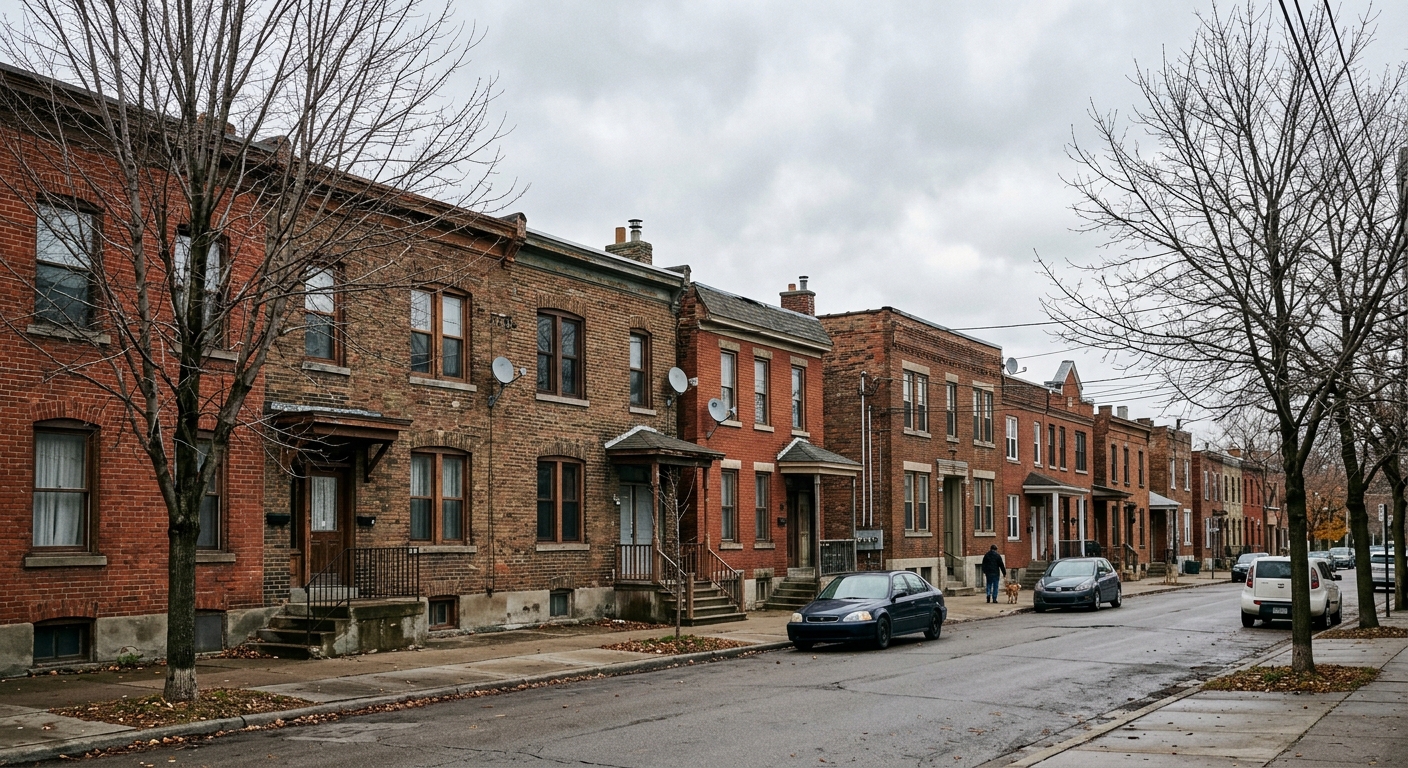
AI-generated illustration; not a photograph of the reported event.
- calendar_today November 17, 2026
Edmonton's Housing Crisis Deepens as Need Rises
The City of Edmonton is grappling with a growing housing crisis as a new report reveals that an increasing number of households in the region cannot afford adequate housing. The situation is projected to worsen as the city's population continues to grow, raising concerns among city officials and residents alike.
Core Housing Need Identified in New Report
The report, presented to the city’s community and public services committee, draws a stark picture of housing affordability in the Edmonton Metropolitan Region. According to the assessment, approximately one in ten households are spending more on housing than they can afford, placing them in what is defined as 'core housing need'. This term describes households that pay more than 30 percent of their pre-tax income on housing costs or reside in homes that are overcrowded, unsafe, or in need of major repairs.
"There is a notable level of housing need, a trend that is expected to continue," the report states, warning of persistent challenges ahead if current conditions prevail.
Rising Population and Housing Demand
The Edmonton Metropolitan Region has seen a steady population increase since 2021. Projections suggest that by 2034, the region could require between 94,300 and 131,300 new homes. If affordability trends remain unchanged, around 65,000 households may be in core housing need within the next decade.
Data for the report were compiled through Edmonton’s Regional Housing Needs Assessment, a 2025 study conducted by the city in partnership with 12 neighboring municipalities. The assessment highlights that market rents have climbed to levels unaffordable for many full-time minimum wage workers, marking an ongoing erosion of affordability.
Pressures and Service Demands on Edmonton
The responsibility to address the housing crisis is amplified by the lack of shelter services in surrounding municipalities. As the report notes, "Edmonton functions as a centralized service hub, acting as both a regional social safety net and anchor for residents whose needs cannot be met by neighbouring municipalities." This increases pressure on Edmonton to provide not only housing, but also a range of social services.
The report also points to challenges faced by individuals exiting the region’s eight correctional and remand centres, which have a combined capacity of 3,405 inmates. These individuals often face significant barriers—including securing housing, employment, and access to social supports—that can increase the risks of recidivism and homelessness.
Federal Homelessness Plan and City Initiatives
Since 2019, Edmonton has partnered with provincial and federal governments to develop 1,419 supportive and transitional housing units that integrate health and social services. City officials are optimistic that the federal government’s recently announced $29-billion, 10-year plan to end homelessness will provide critical support and funding. Mayor Andrew Knack stressed the city’s readiness to act swiftly when federal funding becomes available, highlighting that six parcels of land are already ready for development.
City administration estimates it would require $114 million in capital to prepare additional land for affordable and supportive housing projects over the next four years. The city's approach and future investments will be influenced by decisions made in the upcoming 2027-2030 operating and capital budgets.
Affordability and the Path Forward
Ward Sspomitapi Councillor Jo-Anne Wright emphasized after the committee meeting that affordability is driven by more than just mental health or addiction issues. "Affordability is a concern," she stated, highlighting the role that rising living costs play in housing insecurity and homelessness. With both federal backing and municipal commitment, Edmonton hopes to address the persistent and growing challenges facing its residents in the housing market.
Related coverage
Source: cbc.ca.