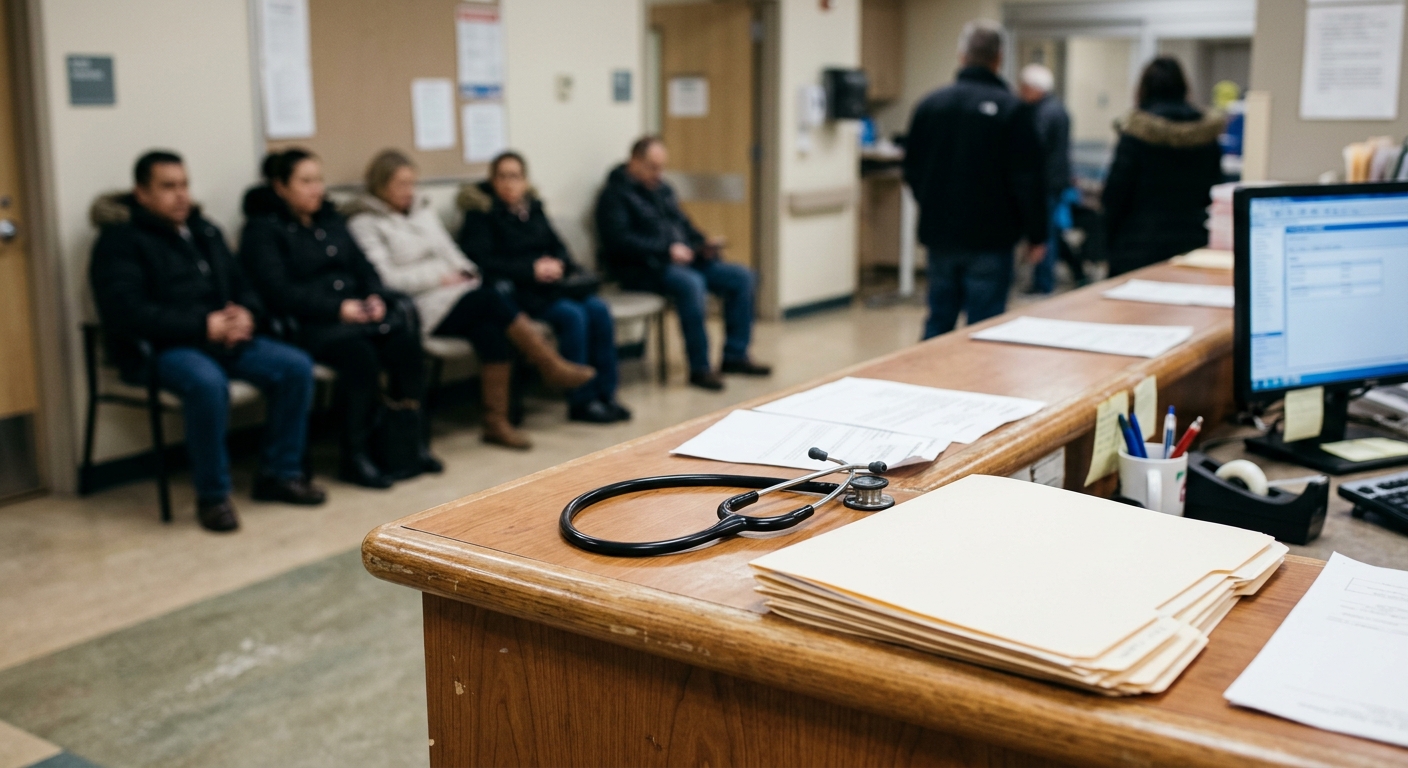
AI-generated illustration; not a photograph of the reported event.
- calendar_today October 20, 2026
Fatality Inquiry Opens in Edmonton
The Alberta Court of Justice has begun a fatality inquiry into the death of Prashant Sreekumar, a 44-year-old father of three who died after an extended emergency department wait at Edmonton's Grey Nuns Community Hospital. The hearing, which started on October 19, 2026, seeks to understand the circumstances of his death and to make recommendations to prevent similar tragedies.
Long Waits and Hospital Overcrowding Reported
Nurse Sean Kydd, the triage nurse who first assessed Sreekumar, testified that long waits and strained resources are common at the hospital, but described the night of December 22, 2025, when Sreekumar died, as particularly overwhelming. Kydd reported a crowded emergency department and a shortage of available beds. He told the court the waiting room had been especially "spicy," with patients being argumentative and aggressive, possibly exacerbated by flu season.
Sreekumar's Experience in the Emergency Room
Prashant Sreekumar sought care for chest pain that started about 30 minutes prior to his hospital arrival. He reported numbness in his hands and discomfort in the center of his chest. According to his family, Sreekumar waited nearly eight hours in the emergency department before being seen by a doctor. Nurse Kydd recalled the patient appearing anxious and concerned but did not recall Sreekumar rating his pain as severe or displaying classic signs of a heart attack, such as dusky skin or difficulty speaking. Kydd added that transferring a patient to another hospital would have required a doctor’s order, outside his own responsibilities.
Expert Testimony: Cause of Death and Broader Issues
Forensic pathologist Dr. Cecilia Wu testified that Sreekumar died from an acute ascending aortic dissection, a serious tear in the main artery carrying blood from the heart, with high blood pressure as a contributing factor. Dr. Wu said she had identified 24 similar deaths in Alberta over ten years involving patients waiting for care in emergency departments or suffering fatal events soon after discharge. She recommended that medical examiners and doctors share information more effectively to identify patterns and help prevent further deaths.
Cardiac surgeon Dr. Holly Smith described ascending aortic dissection as a life-threatening emergency that can be difficult to diagnose, since its symptoms often mimic those of heart attacks or strokes. Dr. Smith emphasized that the risk of death increases by as much as two percent for every hour diagnosis and treatment are delayed, highlighting the critical importance of timely diagnosis and transfer to a cardiac surgery centre.
Family's Search for Answers
Sreekumar’s wife, Niharika, attended the inquiry and was given the opportunity to question witnesses. She spoke to reporters about her husband's final moments, recalling that he collapsed in her arms and expressed feeling dizzy before passing away. Niharika stated her hope that the inquiry will lead to changes in the emergency department wait system and prevent similar incidents in the future. "Hopefully they can have something in place … that is actively monitored," she said.
Next Steps in the Inquiry
Justice Randal Brandt is presiding over the inquiry, which will continue for one week in October and resume for another week in December. The process aims to assess emergency room delays and hospital overcrowding, and may result in recommendations for provincial healthcare improvements.
Source: cbc.ca.