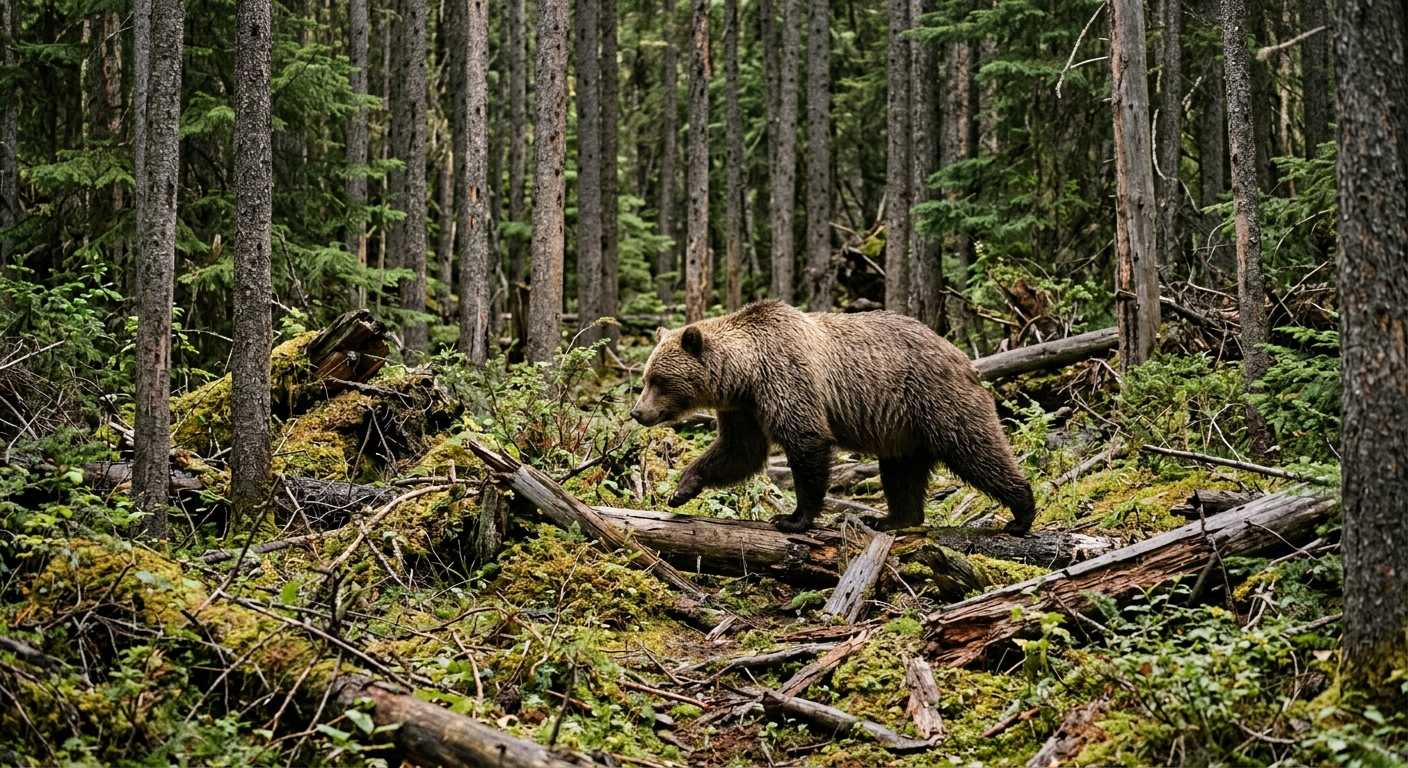
AI-generated illustration; not a photograph of the reported event.
- calendar_today October 11, 2026
Grizzly Bear Poaching Cases Spark Outrage in Alberta
Provincial authorities in Alberta are investigating a series of grizzly bear poaching incidents after four bears were found illegally killed at three separate locations over the past year. Among the disturbing discoveries was a bear found abandoned, its paws removed, highlighting the concerning rise in animal poaching and disregard for wildlife.
Details of Recent Poaching Incidents
Alberta Fish and Wildlife Enforcement Services is leading the investigations into the illegal killings. On September 30, a grizzly bear was found shot dead along a road about 20 kilometres north of Swan Hills, northwest of Edmonton. The following day, another poached grizzly, with all four paws removed, was located in a remote area between Little Smoky and Fox Creek. These events came after two other grizzlies were discovered shot dead in June along a road near Sundre, approximately 95 kilometres northwest of Calgary. Additionally, a previous case from November 2025 remains under review, after a bear was found killed by a gunshot wound.
Strict Laws and Reporting Incentives
Hunting grizzly bears has been banned in Alberta since 2006, aside from Indigenous harvesting for subsistence or cultural purposes. The province regards the illegal killings seriously and is urging the public to report any information through the Report-A-Poacher tip line or online reporting system. Informants whose tips lead to charges can be eligible for a cash reward, as the province works to curb alberta poaching of threatened species.
Experts React to Wildlife Enforcement Challenges
Gordon Stenhouse, a leading biologist and researcher of grizzly bear populations in Alberta, described these poaching cases as disappointing but not surprising. "To shoot and leave any animal, and especially a grizzly bear, a threatened species, shows a disregard and disrespect for wildlife," he commented. Stenhouse estimates the number of found poached bears is likely only a fraction of actual cases. According to provincial records, from 2020 to 2025 there were 28 documented incidents of illegal grizzly bear fatalities, comprising about 17% of all grizzly deaths during that period. Other leading causes include management-related culls and vehicle strikes.
Grizzly bears have been recognized as a threatened species in Alberta since 2010. Professor Mark Boyce, an ecologist at the University of Alberta, considers the recent poachings unfortunate but does not regard poaching as the central threat to bear conservation. Boyce pointed to an active black market for bear paws, adding both financial motivation and human fear or animosity toward bears can contribute to wildlife enforcement difficulties.
Addressing Human-Wildlife Conflict and Safety
Kim Titchener, founder of Bear Safety and More, identified poaching as a symptom of the broader challenge of human wildlife conflict. She stressed the need for improved coexistence strategies, suggesting that communities employ preventive measures like electric fencing, guard dogs, and bear-resistant containers, rather than resorting to lethal force. Titchener cautioned, "You can go and shoot and kill that bear that is killing your chickens, but another bear is just going to show up...so you really need to address the cause of this."
To mitigate risks, Alberta's government has committed $700,000 over five years from 2024 onward to help rural landowners implement carnivore deterrence measures, such as electric fencing and removing attractants. Additionally, provincial BearSmart programs support education and safety in bear country to reduce grizzly bear deaths.
State of Alberta's Grizzly Bear Population
The province estimates its grizzly bear population at around 1,000 individuals, though the last comprehensive study was conducted in 2018. The need for updated data, effective enforcement against illegal killings, and ongoing conflict prevention remains critical to Alberta's wildlife conservation efforts.
Anyone with information about these poaching incidents is encouraged to contact the Report-A-Poacher line or submit a tip online.
Source: cbc.ca.