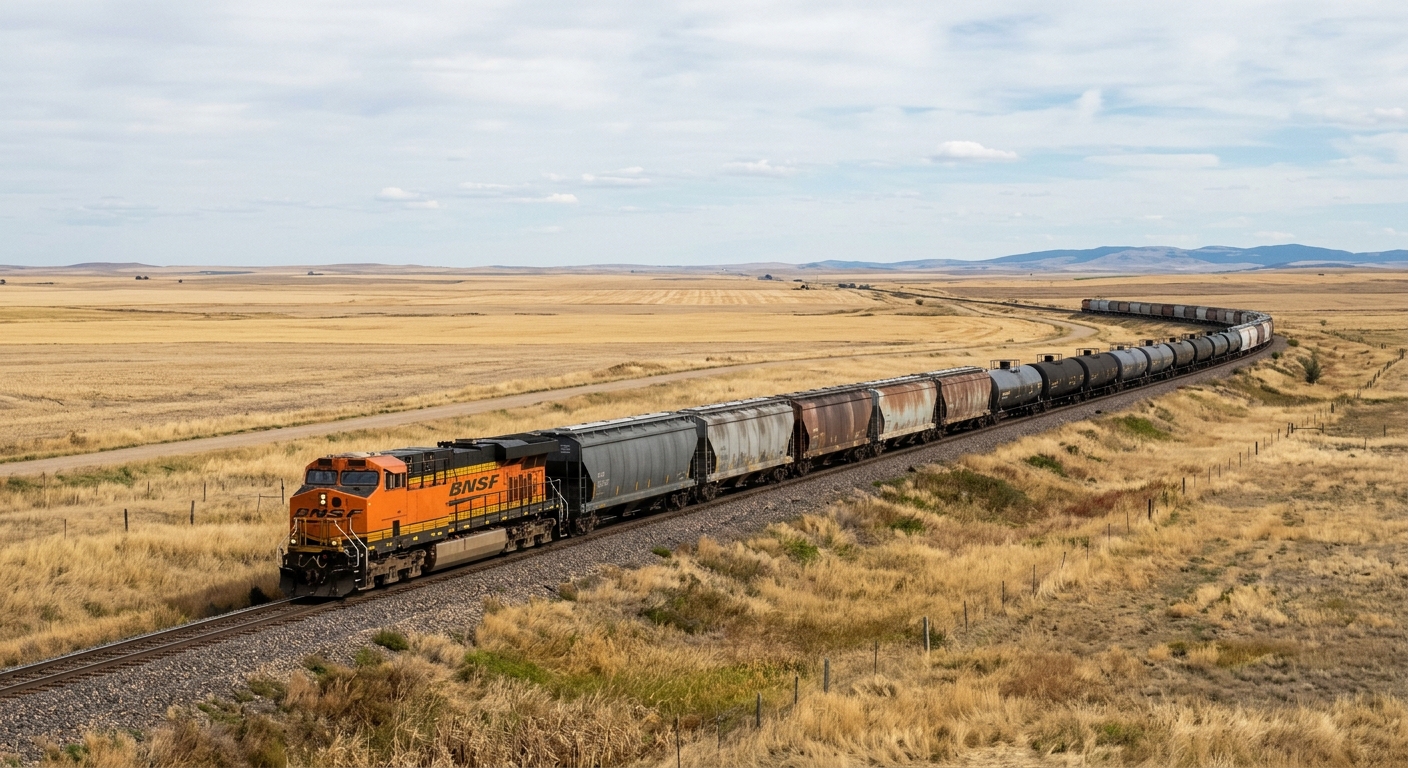
AI-generated illustration; not a photograph of the reported event.
- calendar_today July 27, 2026
Alberta, Canada – Railway freight volumes in Alberta posted a modest yet meaningful gain in May 2026, reflecting ongoing resilience and evolution in the province’s transport sector. The shipment of railway freight reached 33.3 million metric tonnes across Canada, a 1.0% increase over the same month last year, positioning current volumes above the five-year May average and approaching record levels last seen in 2019.
Grain Shipments Propel Industry Growth
Alberta’s vital role in Canada’s agricultural economy was evident as rail shipments of key grains, especially wheat and canola, saw significant year-over-year increases. Wheat carloadings climbed by 12.3%, while canola exhibited a striking 27.0% surge. This robust grain transport underscores the thriving agricultural export activity, cementing the position of Alberta producers in both national and international markets.
Energy Exports and Fuel Oil Freight See Gains
Elevated shipments of fuel oils and crude petroleum also contributed to May’s growth in freight tonnage. The uptick in fuel oil freight comes as global demand recovers, with Alberta’s energy sector remaining a linchpin for regional economic stability. These developments bolster the province’s role in supporting Canadian exports through efficient rail infrastructure.
Coal Decline and Iron Ore Shipment Reductions
Despite broader freight gains, certain commodities faced headwinds. Shipments of coal declined for the third consecutive month amid softening demand from Asia. Similarly, iron ore shipments experienced their sharpest year-over-year decrease since January 2022, reinforcing challenges facing industrial exports. The ongoing coal decline and reduced iron ore shipments highlight evolving market pressures on Alberta’s traditional mining sectors.
Shifts in Intermodal Traffic and Import Demand
Intermodal traffic, comprised primarily of containerized goods, slipped by 0.9% compared to last year. This mild downturn reflects a cooling in consumer imports, as demand for foreign-produced goods moderates. The interconnected nature of rail and international trade means Alberta’s logistics networks continue to adapt in response to global consumption patterns and supply chain realignments.
Rising Cross-Border US Rail Freight
One standout development in May was an 8.8% jump in rail freight received from the United States, surpassing the five-year average for May. Increased us rail freight underscores the deepening economic ties between Alberta and American markets. Enhanced cross-border movement of goods signals robust commercial linkages that benefit Alberta’s exporters and local economies alike.
Freight Tonnage: A Mixed Yet Optimistic Outlook
Rail carloadings data for May reflect a diverse and evolving landscape. While agriculture and energy sectors drive positive momentum in railway freight, traditional mineral exports face persistent challenges. The ability of Alberta’s rail shipments to adapt—integrating higher volumes from sectors such as grain transport and fuel oil freight—speaks to the region’s capacity for resilience and innovation in a shifting global marketplace.
As stakeholders across Alberta continue to capitalize on burgeoning Canadian exports and growing ties with U.S. partners, railway freight remains at the heart of the province’s economic vitality. Future trends will be shaped by shifting commodity demand and the ongoing evolution of trade dynamics, with Alberta positioned to benefit from both regional strengths and international opportunities.