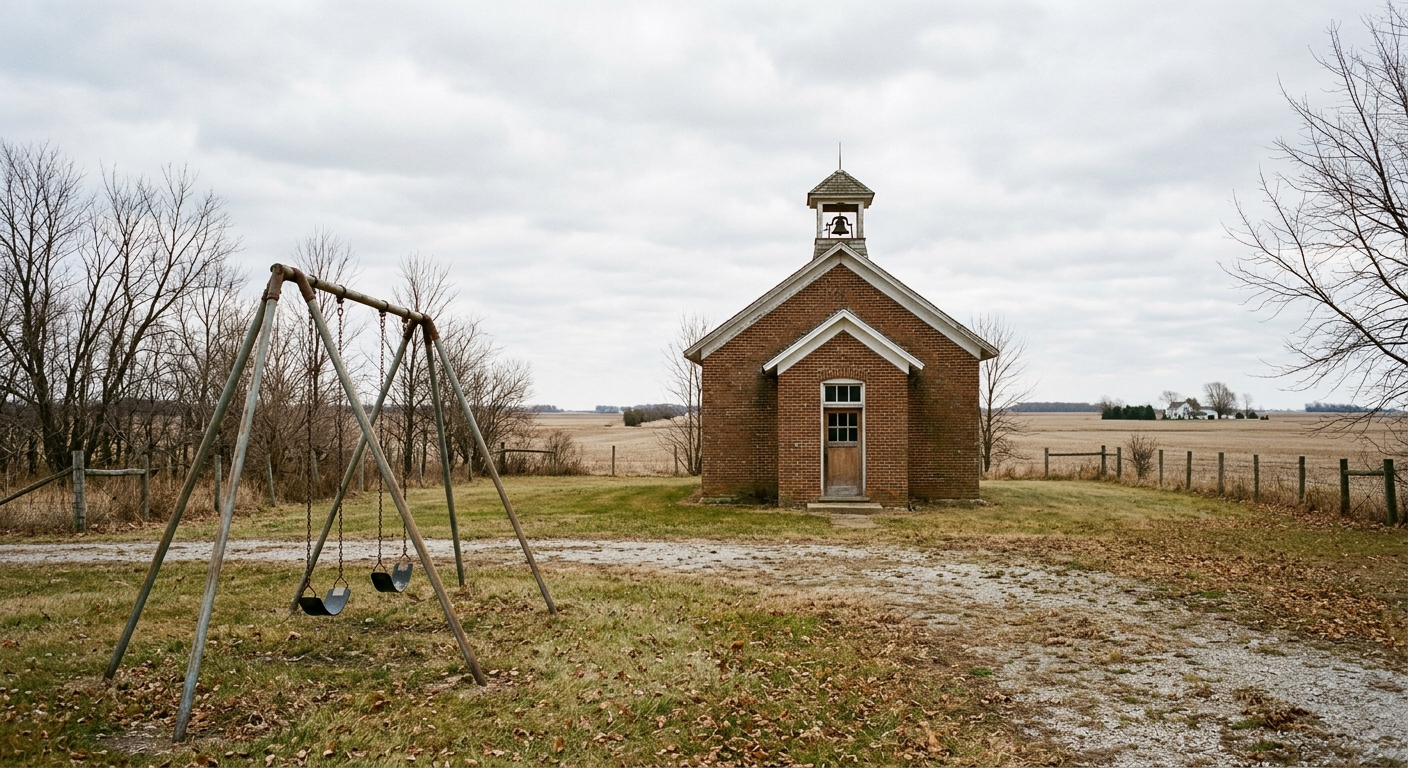
AI-generated illustration; not a photograph of the reported event.
- calendar_today November 16, 2026
Enrolment Declines Threaten Rural Schools in Peace Region
Rural schools in Alberta’s Peace region are facing mounting challenges as enrolment numbers continue to fall. The Peace River School Division (PRSD), responsible for several schools across northwestern Alberta, is seeing declines that could put certain institutions at risk of closure.
Sharp Decline Sparks Concern Over Funding
This fall, the PRSD experienced an enrolment drop of about four per cent, equating to a loss of roughly 125 students across the division’s schools. This decline has particularly affected small rural schools, such as the Nampa Public School, which now counts just 40 students in total, including five in kindergarten. Under the province’s adjusted enrolment model, this results in 37.5 full-time students. Should enrolment dip below 35, the school stands to lose nearly half of its current funding from Alberta’s Rural Small Schools Grant—a cut of approximately $244,000 from its $500,000 grant.
David Rushton, board chair of the PRSD, emphasized the significance of such a funding reduction, stating, “If you take $244,000 out of their budget, I mean, you have to get it from somewhere.”
Addressing the Rural Small Schools Grant and Budget Concerns
Six of the PRSD’s thirteen schools receive additional support from the Rural Small Schools Grant, which is designed to help communities facing these enrolment-related funding cliffs. The Alberta government’s 2026 budget has increased the grant by three per cent, bringing the total allocation to $135 million. Ministry of Education and Childcare spokesperson Garrett Koehler noted the province’s ongoing commitment to rural education and acknowledged the pressure that declining enrolment places on small schools.
Community Engagement to Tackle Declining Numbers
In response to these concerns, PRSD trustees are planning to hold a series of engagement sessions in the division’s six rural school communities. The first meeting is expected to take place in Nampa before the end of the year. According to Rushton, “It’s really important to get out and talk to the people out there long before this becomes a significant issue.”
PRSD superintendent Jeff Thompson cited multiple possible causes for the enrolment decline, including fewer larger families, more schooling options, and parents choosing to keep children home for kindergarten. Red Earth Creek School, another institution in the region, also faces similar funding risks though remains open due to a lack of alternatives in the area.
Innovative Solutions: Charter Schools and Agricultural Literacy
Certain communities are turning to innovative programming and alternate school models to keep their schools viable. After the PRSD closed the Dixonville school due to persistently low enrolment, community members formed a society and reopened it in September 2026 as the Dixonville Rural Academy, operating under the charter model. The school's focus on “agricultural literacy” is drawing students and enthusiasm, with around 50 enrolled currently. Secretary-treasurer Kashia Pyska described the school as a community focal point, recently receiving hydroponic equipment and aiming to establish a school barn in the future.
University of Alberta professor Bonnie Stelmach, an expert in rural education, noted that innovative curricula focused on local strengths—such as agriculture and natural resources—can give small schools a new lease on life. She referenced the recent success of Fulham Community School, which avoided closure by adopting a specialized curriculum.
Unique Challenges and Opportunities in Rural Education
While overall trends point to enrolment decline, Professor Stelmach cautions against generalizing all rural communities, observing, “When you’ve seen one rural community, you’ve seen one rural community—they’re not all the same.” She highlighted how developments like remote work, virtual healthcare, and online commerce are gradually eroding some barriers to rural living, potentially making these areas more attractive in the future.
As rural schools contend with dwindling numbers and funding challenges, community engagement and innovative programming remain key to sustaining educational opportunities for students in Alberta’s Peace region.
Related coverage
Source: cbc.ca.