
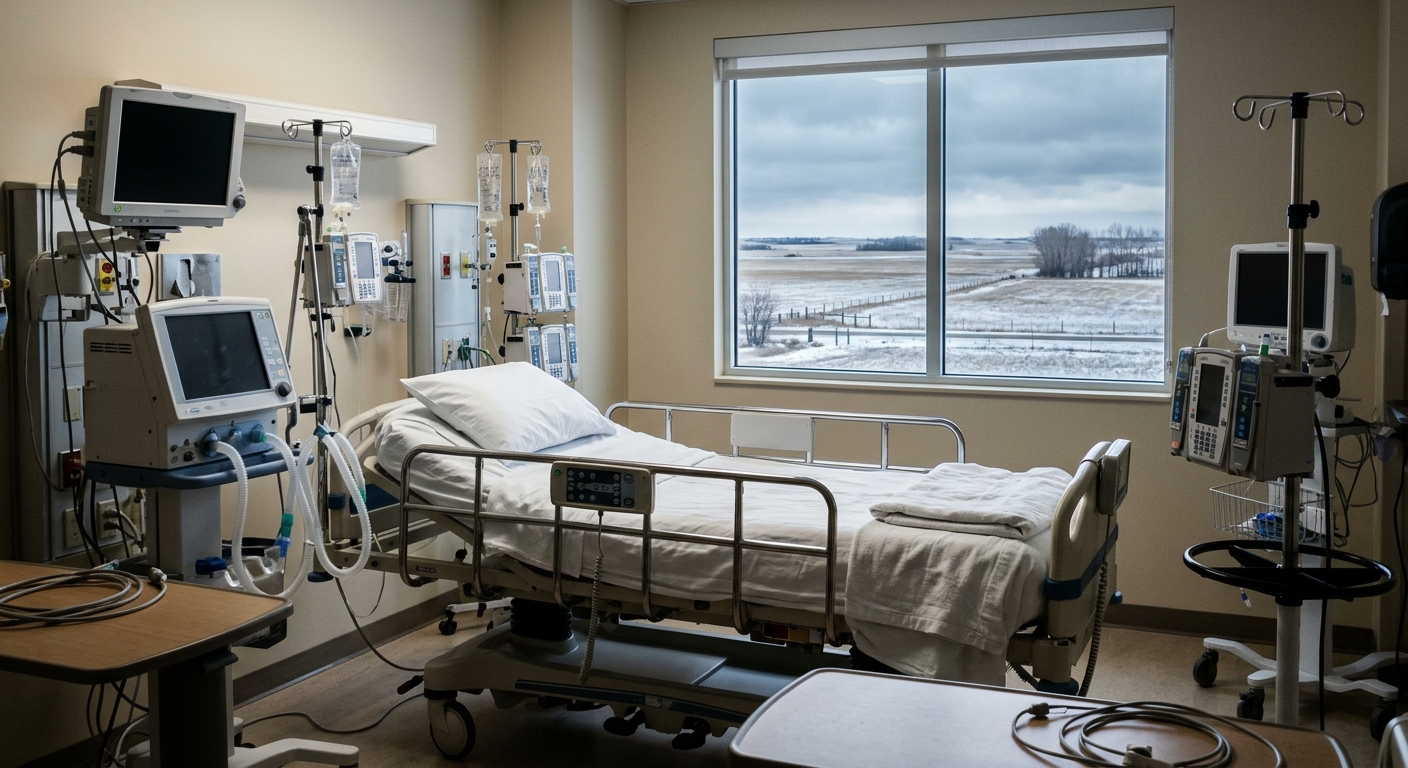
AI-generated illustration; not a photograph of the reported event.
- calendar_today October 21, 2026
Mass Casualty Fire at CFB Wainwright Leads to Severe Burn Injuries
On Saturday, October 17, 2026, a sudden change in winds at Canadian Forces Base (CFB) Wainwright transformed a controlled grass fire into a rapidly spreading blaze. The incident occurred during live-fire training exercises and resulted in the deaths of four soldiers and the hospitalization of 39 others, many suffering serious and severe burns.
Immediate Strain on Alberta's Burn Care System
Medical professionals are warning that the aftermath of the Wainwright fire presents major challenges for Alberta's health-care system. According to Dr. Vincent Gabriel, medical director of the Calgary Firefighters Burn Treatment Centre, recovering from extensive burn injuries is a long, difficult process. Severe burns can lead to complex issues, including infection risk, wound management, respiratory problems, and organ failure. Hospital stays for these patients are typically measured in months rather than days or weeks.
Limited Burn Centre Capacity and Resource Concerns
Alberta has two specialized burn care centres: the Calgary Firefighters Burn Treatment Centre at Foothills Hospital and the Edmonton Firefighters Burn Treatment Unit at the University of Alberta Hospital. Each centre has only eight dedicated beds for burn recovery, making resource limitations a significant concern in the wake of a mass casualty event. Dr. Gabriel emphasized that burn care professionals are highly dedicated but face real constraints in staffing and supplies. Large-scale emergencies can quickly exhaust stocks of specialized equipment, dressings, and skin substitutes, sometimes requiring support beyond provincial or even national borders.
Complex Burn Treatment and Lengthy Surgeries
Survivors like Corporal Sean Hiatt, who reportedly suffered burns to about half his body, are facing numerous surgeries over the coming months. Initial efforts focus on airway stabilization and fluid management, after which the laborious process of wound debridement and skin grafting can begin. Grafts using the patient's own skin are considered the gold standard in burn surgery, but donor skin also plays a crucial role—though it is in short supply even under normal circumstances. Once discharged, patients with severe burns often continue to require physical therapy and ongoing medical care as they adapt to lasting effects of their injuries.
Wider Impact and National Burn Care Collaboration
The scale of injuries from the Wainwright incident has prompted support from burn specialists and resources in other provinces. Facilities like the Ross Tilley Burn Centre at Toronto's Sunnybrook Health Sciences Centre have offered to accept patients and supply donor skin if needed. Dr. Marc Jeschke, director of the burn program for Hamilton Health Sciences, pointed to the incident as an example of the need for more burn care capacity nationwide—highlighting that there are only 46 specialized burn beds across Canada.
Long-Term Recovery and Systemic Challenges
Danielle Fuchko, a burn disaster preparedness expert, described burn injuries as 'lifelong' conditions, emphasizing that Alberta’s hospital and surgical capacity will be challenged by ongoing burn recovery needs for months or even years. Despite Alberta being uniquely equipped with two American Burn Association–verified burn treatment centres, limited capacity remains a structural challenge, especially during mass casualty incidents.
Looking Ahead
This event underscores the fragile balance between burn treatment resources and the potential for overwhelming demand. Medical personnel across the country are responding collaboratively, but ongoing patient care and burn recovery will demand significant resources and support long after the immediate aftermath is over.
Source: cbc.ca.




