
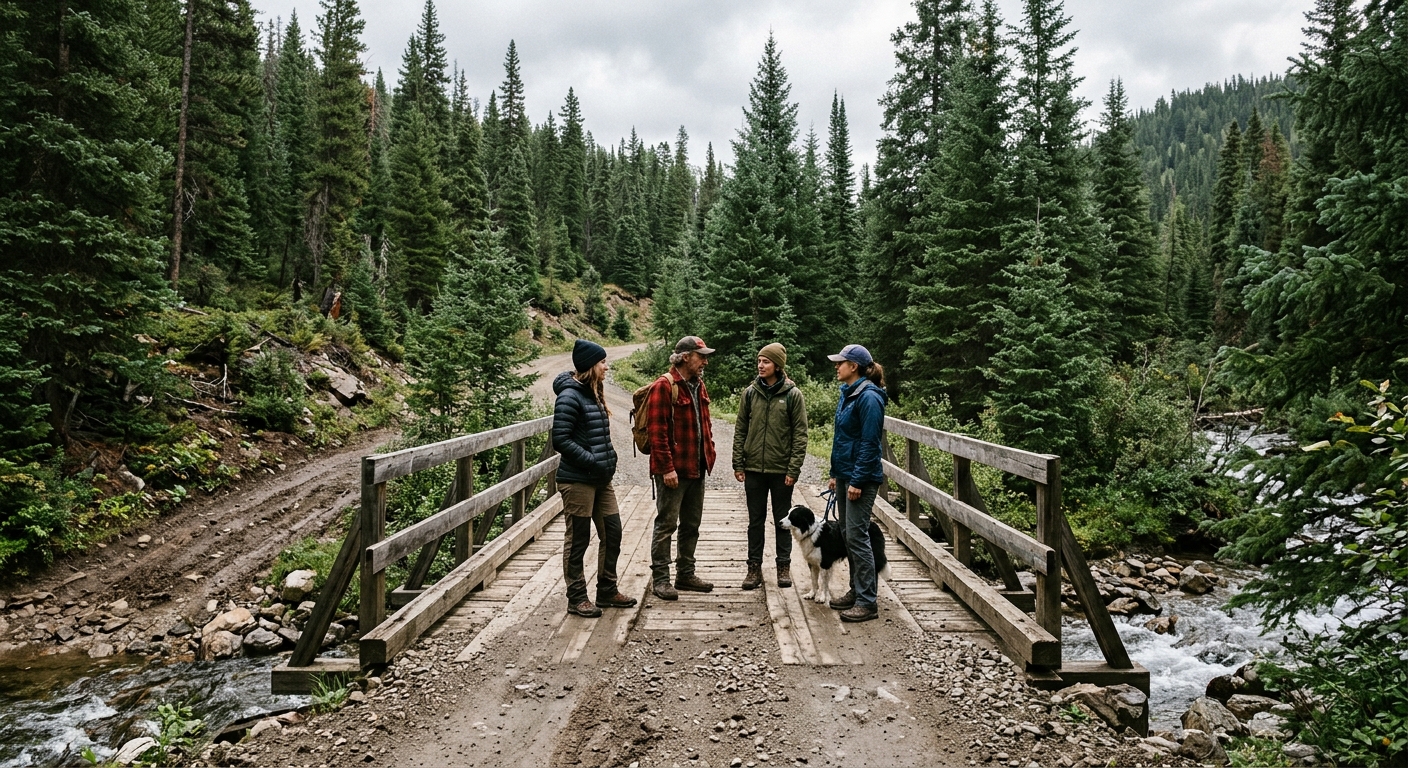
AI-generated illustration; not a photograph of the reported event.
- calendar_today November 6, 2026
Protests Ongoing Against Planned Forest Harvest in Crowsnest Pass
For more than six weeks, members of Defenders of the Eastern Slopes have been protesting the planned clear-cutting by forestry company West Fraser of approximately 460 hectares in the Crowsnest Pass region. The area involved is located near Allison Creek in southwest Alberta, close to the provincial border with British Columbia.
Concerns About Wildfire Risk Reduction and Environmental Impact
The protests center on West Fraser's accelerated harvesting as part of Alberta's Community Hazardous Fuels Reduction (CHFR) program. While the provincial government maintains that the work will provide "timely wildfire risk reduction" for communities such as Tecumseh and the municipality of Crowsnest Pass, Defenders of the Eastern Slopes argue that the proposed measures may not be the right treatment, at the right place, or at the appropriate scale for the region.
Community organizer Colin Smith stated that support for the protest has grown, with some members camping at the site to raise awareness. Smith emphasized the need for a new approach to managing the forests of the Eastern Slopes, envisioning long-term stewardship prioritizing water resources and intergenerational planning.
Peaceful Civil Disobedience at the Harvest Site
According to Smith, protesters have practiced peaceful civil disobedience to slow West Fraser's progress. This included temporarily blocking a bridge in a meadow from being moved to access the logging area. After West Fraser obtained a temporary injunction and RCMP members were present, the bridge was moved. Smith clarified that the group does not intend to impede the company further and that protest actions have remained non-violent.
Crowsnest Pass RCMP commander Sgt. Mark Amatto confirmed that routine patrols are being made to ensure both the protesters and West Fraser are conducting themselves appropriately, and noted that the situation has remained peaceful.
West Fraser and Government Justify Harvesting Plans
In a statement, West Fraser said its planned harvesting aligns with the direction of the CHFR program, which seeks to prioritize fuel reduction activities near communities identified as high risk for wildfire. The company asserted that Alberta has a strong regulatory framework covering environmental protections and water sources during harvesting.
West Fraser stated its commitment to environmental standards and responsible stewardship, including monitoring conditions before and after harvesting. The company also commissioned a voluntary, independent review to evaluate the hydrological impacts of the planned harvest, which found that the effect on the Allison Creek area would be minimal and further reduced as the forest regrows. The assessment forecasted only relatively small changes in streamflow, which is crucial for the area's aquatic habitats.
Alberta Forestry and Parks supported the plan, stating that communities in the Allison Creek region were identified as priorities following a wildfire-risk analysis of over 200 communities in Alberta’s forest protection area. Minister Todd Loewen said the harvest would primarily remove spruce and pine—the two most flammable tree species—to slow potential wildfires and protect area residents, similar to treatments done in other communities such as Whitecourt, Hinton, and Canmore.
Calls for Preservation of Old-Growth Forest
Despite assurances from West Fraser and the provincial government, some protest members, such as Mike Judd, highlight the importance of preserving old-growth forests. Judd argued that old-growth trees help regulate water flow, prevent flooding, and reduce the drying out of the landscape, thereby supporting the environment and the long-term health of the region’s water supply.
Ongoing Debate Over Forest Management
The debate over the harvest in Crowsnest Pass underscores broader questions of forest management, wildfire risk reduction, and environmental stewardship. As the protest enters its seventh week, both sides continue to advocate for their vision of balancing community safety and ecological protection.
Related coverage
Source: cbc.ca.