- calendar_today August 31, 2025
It Was Just a Moment. But It Felt Like Magic.
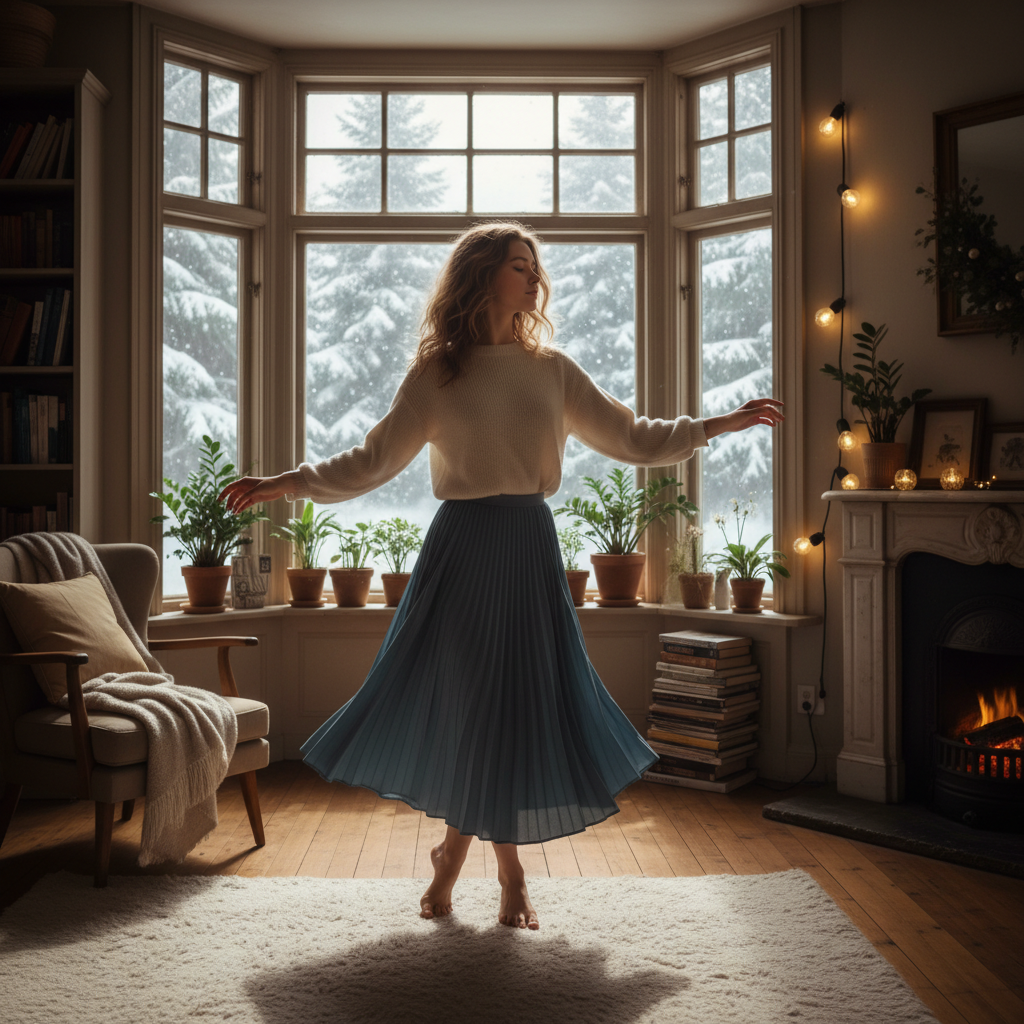
You ever have one of those Alberta evenings where everything’s just… still? Maybe you’re looking out over a snowy street from your apartment window, or walking home through a windblown prairie sunset. That’s the kind of space where real things happen. Quiet, vulnerable things.
That’s where the Apple dance came from. Not from a studio or a team or a marketing strategy—but from Kelley Heyer, just dancing in her room. Just feeling something and moving through it. She filmed it on a whim. And somehow, it landed.
It wasn’t flashy. It wasn’t trying too hard. That’s probably why it hit so hard across Alberta.
Suddenly, you saw the Apple dance everywhere. High school kids doing it in school hallways. Someone posted it from a snowy sidewalk in Red Deer. A couple of U of A students filmed their version with toques still on and Tim’s cups on the floor.
It became a thing. But while the rest of us danced, Kelley was getting pushed out of her own story.
The Dance Got Big. The Creator Got Left Behind.
So here’s what went down: Kelley copyrighted the Apple dance. She got into licensing talks with Roblox—the kind of meetings you hope lead to something official. But while everything was still in conversation, the company went ahead and added her dance as a paid emote in their game Dress to Impress.
No contract. No signature. Just… launched.
They sold the emote for $1.25, and yeah, it blew up.
Here’s what we’re looking at:
- Over 60,000 downloads
- About $123,000 made off that emote
- 0 legal agreement signed
- 0 dollars or credit to Kelley
- 1 creator who had to file a lawsuit just to be acknowledged
Alberta Gets It
Let’s be honest—we know how this feels here. Alberta is full of people who build things from scratch. Whether it’s a startup out of a garage, or a mural painted on a downtown brick wall, or a song written at 2 a.m. after a tough day—we put heart into what we create.
And when someone else takes it? Uses it without asking? That’s not just business. That’s personal.
Kelley didn’t choreograph this dance to get rich. She did it because it felt true. And she shared it hoping it might make someone else feel a little more okay too.
Instead, it got packaged, sold, and turned into someone else’s payday.
And Roblox? Pretty Much Silent
Their statement was… fine. They said they “respect intellectual property” and that they’re “confident in their legal standing.”
Cool. But that doesn’t change the fact that a young creator watched something she made in her most human moment get turned into profit for a company that didn’t even say thank you.
This Was Never Just a Dance
It was Kelley saying, this is me. And we responded. We felt it. We danced along.
But now, as she’s pushed into legal action, we have to ask—why does it take a lawsuit for a creator to be heard?
A Thought Next Time You’re Watching the Snow Fall
Maybe next time you see a trend on your feed—some dance, some voice, some little slice of joy—you’ll pause and ask: Who made this? Did they ever get credit?
Because behind the viral moves and the catchy sound bites is someone like Kelley. Someone who gave the world a piece of herself, and just hoped to be seen.
And in a place like Alberta, where we don’t forget where things come from, maybe we owe her that.