
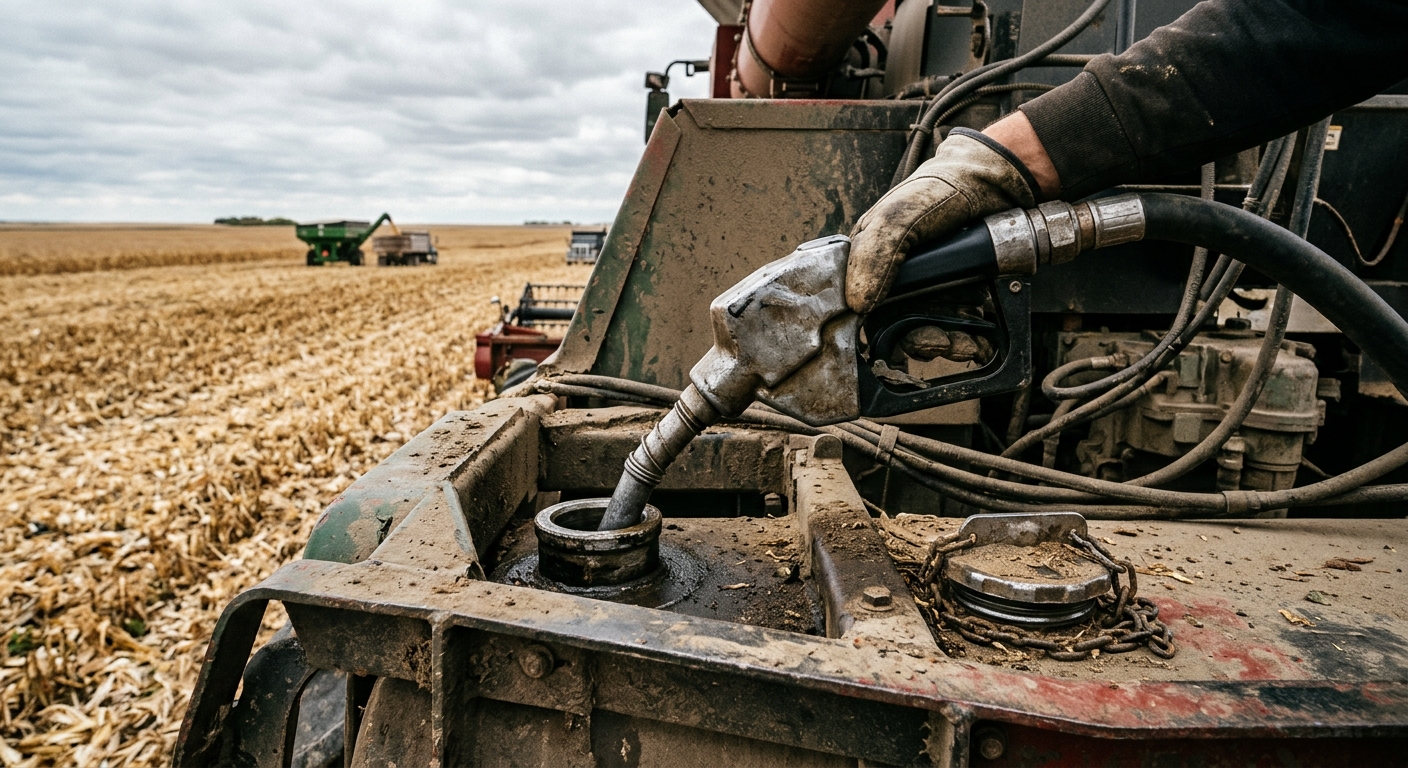
AI-generated illustration; not a photograph of the reported event.
- calendar_today October 30, 2026
Diesel Prices Double Harvest Costs for Alberta Farmers
This fall, Alberta farmers are contending with record-high diesel prices, significantly increasing the cost of crop harvesting and placing additional strain on farm margins. Kody Traxel, operator of Traxel Ag Ventures near Seven Persons, southwest of Medicine Hat, reports that his farm’s diesel expenses have "pretty well doubled" compared to previous years, making this harvest season particularly challenging.
Kody Traxel's Farm Faces Mounting Fuel Expenses
Traxel Ag Ventures manages a 2,000-calf custom feed operation and a commercial herd of between 500 and 1,000 cows. Alongside its livestock, the farm cultivates about 800 acres of irrigated land, mainly growing corn and hay as livestock feed. Traxel shared that, during this year’s high-yield corn harvest, he paid an average of $2.18 per litre for diesel. The total fuel cost for bringing in the crop reached approximately $100,000. With increased production and longer equipment hours, Traxel anticipates his farm’s diesel bill could reach double that figure by year’s end.
“The fuel price going up, it hit us pretty hard now, filling our tank and filling our equipment,” Traxel said.
Industry-Wide Squeeze on Farm Margins
Graeme Crosbie, senior economist at Farm Credit Canada (FCC), noted that diesel prices reached record highs across the Prairies during this fall’s harvesting period. "They're adding an extra expense at a time when for the average producer in the Prairies, margins have already been tight for a couple of years," Crosbie explained.
The FCC’s recent analysis estimated that diesel price increases could cost Saskatchewan farmers an additional $37 to $49 per hectare, with similar impacts expected in Alberta and Manitoba. Depending on the crop and region, overall input costs can range from $182 to $243 per hectare. On a 2,000-hectare farm, this could mean $70,000 to $100,000 in extra fuel expenses alone—a significant amount for any producer.
Fuel Surcharges Influence Supply Costs
Beyond direct harvest costs, Traxel has noticed rising fuel surcharges on goods and services delivered to his farm. "It's getting pretty out of hand when the trucking for these products like gravel or feed is exceeding the price of what they're actually hauling. It's pretty crazy," he remarked. Traxel does not blame trucking companies for implementing these surcharges but notes the impact on his operational costs.
Policy Responses: Diesel Tax Holidays
In response to surging fuel prices, governments have implemented temporary tax relief measures. In September, the federal government extended its fuel excise tax holiday on diesel through January 31, 2027. Subsequently, the Alberta provincial government paused its provincial diesel tax for three months beginning October 1.
Despite these measures, many farmers, like Traxel, remain concerned about ongoing high prices and are considering whether to pass on increased expenses to clients in the next feeding season. So far, Traxel has honoured existing price quotes, but he expects future adjustments if diesel costs remain elevated.
The Broader Context: Uncertain Impact on Food Prices
According to FCC economists, it remains unclear whether higher fuel expenses for producers will lead to increased food inflation. Historical data shows that the effect of rising diesel prices on retail food costs can vary and is often influenced by other factors, such as the strength of the Canadian dollar. "There's been times when diesel prices have jumped by double digits in a very short period of time and the impact on food inflation wasn't significant, and there's been times when it has been," Crosbie noted.
For now, Alberta farmers will continue to adapt to tight margins and uncertain forecasts as they navigate the financial pressures of another challenging harvest season.
Related coverage
Source: cbc.ca.