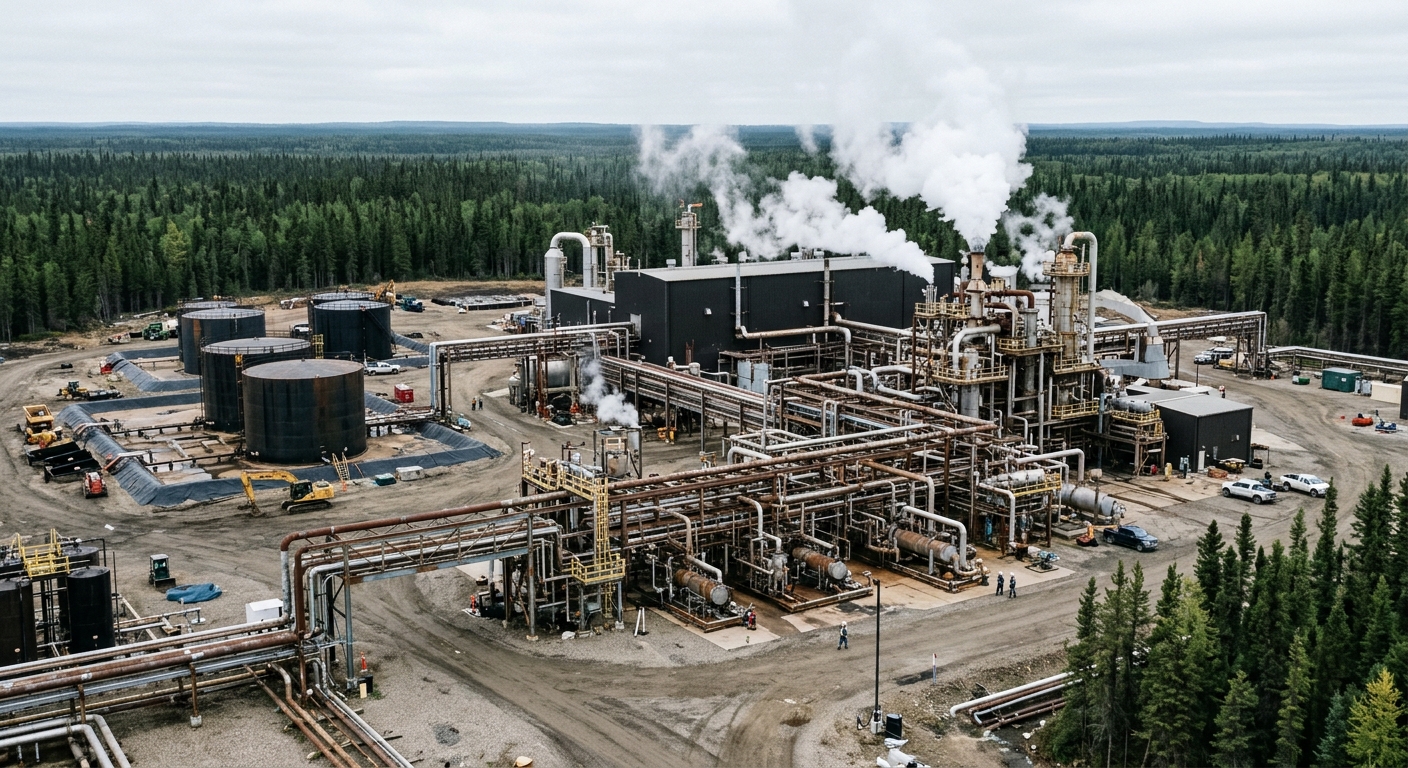
AI-generated illustration; not a photograph of the reported event.
- calendar_today November 10, 2026
Alberta Proposes New Oilpatch Subsidies
The Alberta government is set to introduce new subsidies for oil companies later this month, aiming to encourage increased production from the oilsands sector. The move is intended to help fill capacity in the proposed Pacific Link pipeline to the West Coast.
Industry Profits Remain High
This new incentive arrives as major oil producers, including Suncor Energy, Cenovus Energy, Canadian Natural Resources, and Imperial Oil, report combined profits exceeding $12.5 billion in their most recent quarterly statements. According to Studio Energy, the Canadian oil and gas sector is forecast to reach over $200 billion in revenues for 2026. Oil prices have repeatedly surged above $100 US per barrel during the year, influenced by global events such as the U.S.-Iran conflict.
Expert Questions Need for Subsidies
The announcement has prompted some industry experts, like former Husky Energy and Shell Canada executive Janet Annesley, to question the necessity of further incentives. Annesley highlighted the substantial profits and shareholder returns in the sector, saying, “What kind of incentives does the oil and gas sector really need?” She noted that Alberta Premier Danielle Smith would need to clearly justify the decision to provide additional incentives for oil companies.
Addressing Production and Pipeline Uncertainty
Alberta's oil production has already reached record levels. However, the development of several new or expanded pipeline projects raises questions about whether future production will be sufficient to support construction of the Pacific Link pipeline, which Premier Smith wants underway by fall 2027. The government is considering an “alternative enhanced royalty structure” to motivate industry investment and expansion.
Producers Consider Expansion
The planned subsidy is expected to focus on the oilsands sector, the province’s primary oil source, where new projects can significantly impact overall output. Alberta already offers reduced royalties to new oilsands projects during their early years. Some companies, such as Imperial Oil and Suncor Energy, are openly discussing the possibility of accelerating growth projects, though many investors currently prefer maintaining high shareholder returns rather than major new capital investments.
Debate Over Need and Effectiveness
Former Suncor CEO Mark Little described the government’s subsidy plan as “mystifying,” considering the current royalty system's success. He acknowledged, however, that investment deadlines might help ensure continued sector growth. Lennie Kaplan, a former senior manager with Alberta’s Treasury Board, estimated that significant incentives may be essential to attract the billions of dollars required for new large-scale projects. Kaplan's models suggest doubling Alberta's oil production could need $115 billion in incentives from 2027 to 2050, but this could yield up to $250 billion in additional royalties under stable oil price conditions.
Looking Ahead
As the government prepares its official subsidy announcement, industry players and observers watch closely. With robust oil industry profits, some question the rationale for new financial incentives, while others argue they are necessary for long-term sector health and infrastructure development. The effectiveness and fiscal impact of such subsidies remain central topics as Alberta seeks to shape its future energy policy amid evolving market conditions and environmental commitments.
Related coverage
Source: cbc.ca.