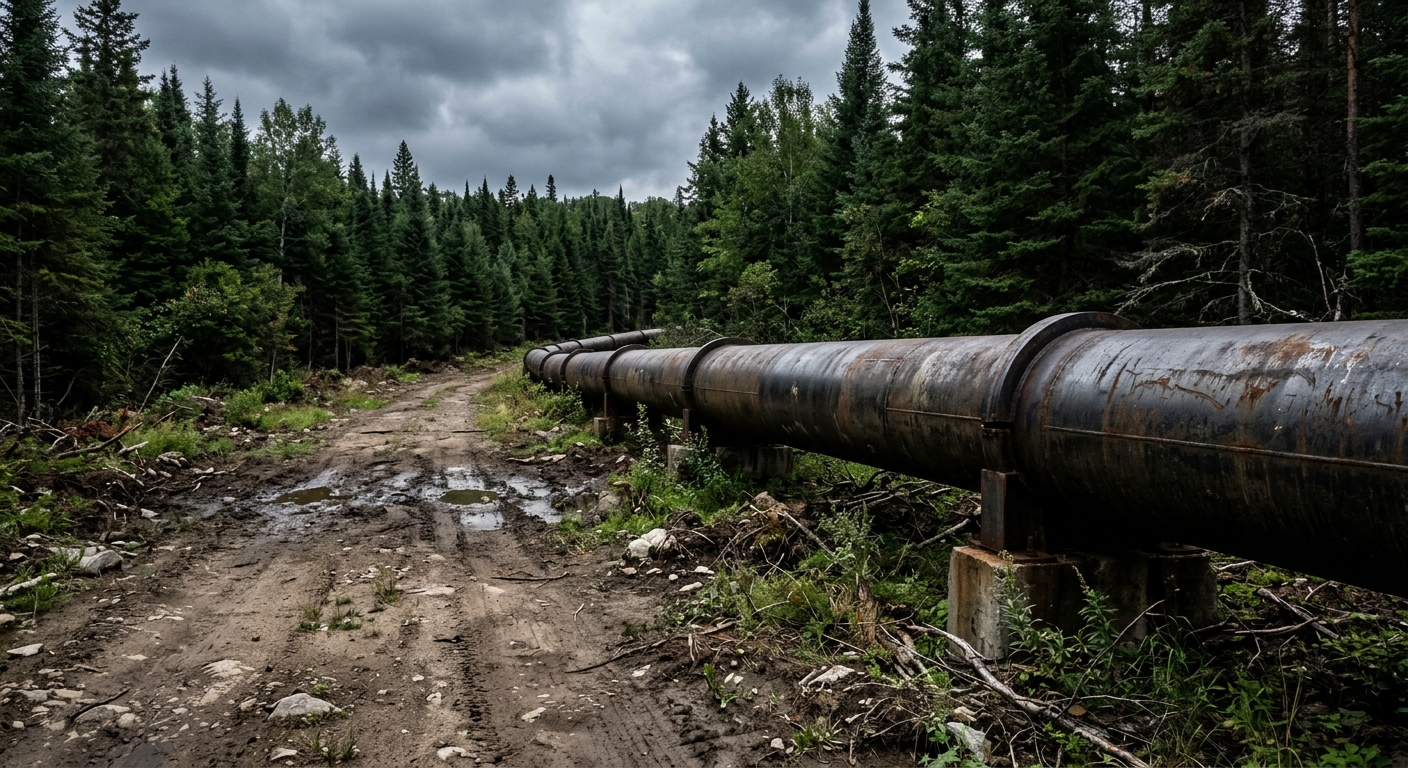
AI-generated illustration; not a photograph of the reported event.
- calendar_today November 10, 2026
Community Gathers to Discuss Proposed Pathways Carbon Capture Project
Residents in the Cold Lake region of northern Alberta are raising questions about the proposed Pathways project, which would bring a 650-kilometre carbon dioxide (CO2) pipeline and a storage site to the area. More than 50 people attended an information session on November 5 at the Bonnyville & District Centennial Centre to learn more about the project and express their concerns.
Project Details and Economic Promise
The Pathways project, an initiative of the Oil Sands Alliance, aims to transport about six million tonnes of CO2 per year by the mid-2030s from northeastern Alberta’s oilsands facilities to a permanent underground storage hub near Cold Lake. The Oil Sands Alliance includes five major oilsands companies: Canadian Natural Resources Ltd. (CNRL), Cenovus Energy Inc., Imperial Oil Ltd., Suncor Energy Inc., and ConocoPhillips Canada.
In July, the alliance signed an agreement with the Alberta and federal governments to complete the pipeline by 2032 and begin full operations by 2035. The completion of the Pathways project is also tied to the Pacific Link, a potential new pipeline to the West Coast that could move one million barrels per day.
Resident Concerns: Safety, Environmental Impact, and Consultation
Lori Geneau, a Bonnyville resident present at the session, voiced difficulty finding detailed answers about the plan, stating, “There's nothing in the entire world like this. Nothing is to the magnitude and size of what this scale is that they're planning for the Lakeland area.” Geneau also raised concerns about the lack of an independent environmental impact assessment and emphasized the importance of broad public engagement.
Other attendees questioned the safety of the pipeline and storage facilities and challenged Oil Sands Alliance president Kendall Dilling and CNRL representatives on whether they would live near the infrastructure. Dilling and the others said they would have no issue doing so.
Industry and Government Responses
Kendall Dilling defended the project, highlighting its potential economic benefits for northeastern Alberta and its aim to responsibly reduce oilsands emissions. “This (Pathways Project) is how we, as Canadians, demonstrate that we can grow production, we can get it to new markets, but we do it in a responsible way in terms of safety and environmental responsibility,” Dilling said, adding that project approval is expected next year.
Rebecca DeMott, leading consultation for CNRL, explained that the project has not had a dedicated environmental impact assessment because similar impacts from buried oil pipelines and wells are already known. However, she assured residents that environmental effects on soil, water, and other features will be evaluated before construction begins.
Legal Challenges and Ongoing Community Engagement
The proposed Pathways and Pacific Link projects have drawn legal challenges from three Alberta First Nations, who are concerned about impacts on water, wildlife, Treaty rights, and human health. James Cardinal, a member of Kikino Metis Settlement, said questions remain even after following the project since 2023. Lee Thom, also from Kikino Metis Settlement, expressed interest in learning more from future information sessions and saw potential economic positives, saying that increased oilsands production supports infrastructure and community services.
Alberta’s Ministry of Energy and Minerals issued a statement saying the province is a leader in carbon capture utilization and storage (CCUS), regulated by what it describes as some of the highest safety standards in the world.
Next Steps for the Pathways Project and Community
As the Pathways project moves toward regulatory approval and further community consultation, residents in northern Alberta continue to seek answers about the project’s safety, economic impact, and environmental consequences. Additional information sessions are planned in Fort McMurray, Cold Lake, and St. Paul to allow for broader engagement and discussion of the project’s potential risks and rewards.
Source: cbc.ca.