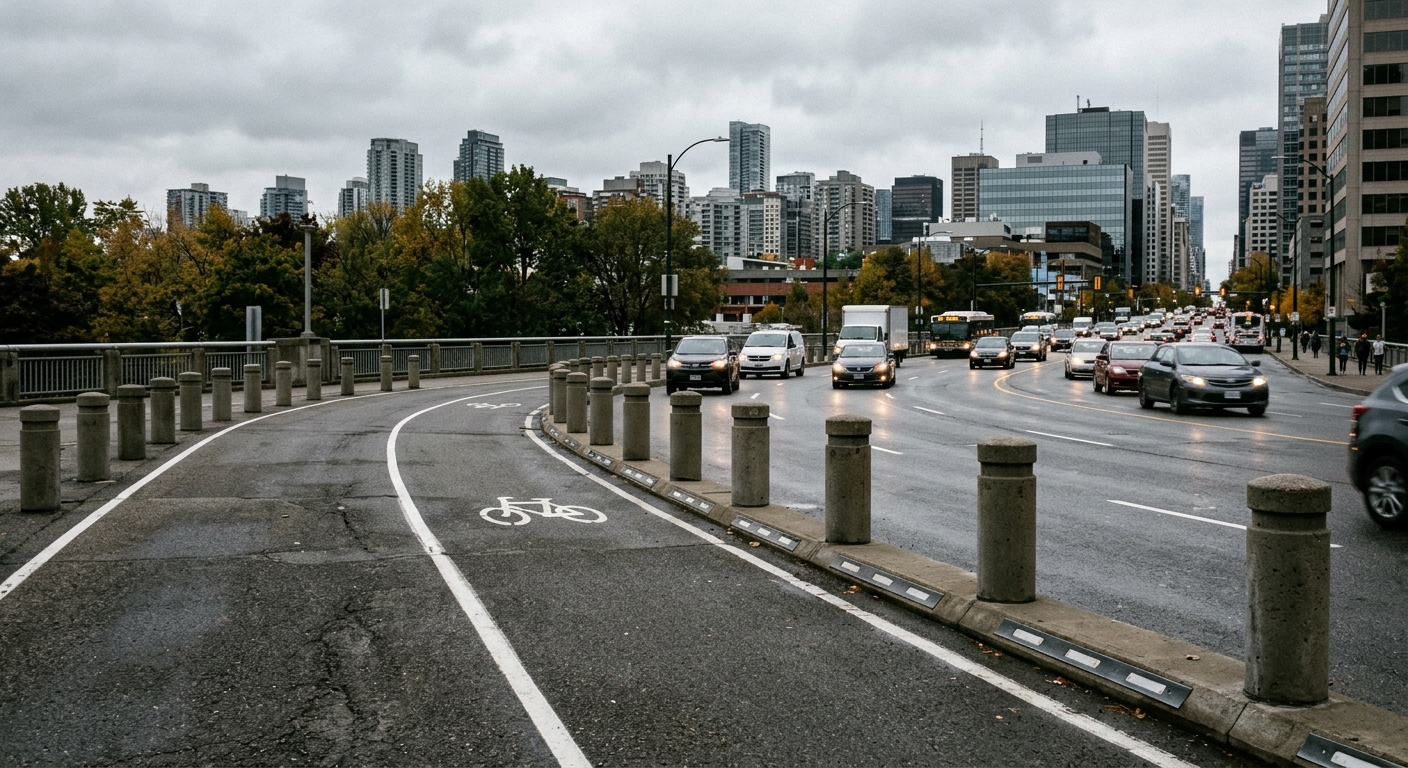
AI-generated illustration; not a photograph of the reported event.
- calendar_today November 19, 2026
Introduction to Bill 43: The Safe and Sensible Roads Act
The Alberta government has introduced Bill 43, titled the Safe and Sensible Roads Act, which would impose significant restrictions on the development and maintenance of bike lanes in the province. If passed, the bill would prohibit the creation of future bike lanes that remove or restrict motor-vehicle traffic and grant the transportation minister the authority to remove some existing bike lanes. The proposed legislation also includes provisions to increase penalties for unsafe commercial trucking, regulate personal e-scooters, and strengthen provincial oversight of municipal LRT projects.
Key Provisions on Bike Lanes and Motor Vehicle Traffic
Under Bill 43, the construction of new bike lanes that limit automobile capacity or parking would be banned across Alberta. The transportation minister would have the discretion to order the removal of selected existing bike lanes, with municipalities expected to cover the costs of such removals. The government stated these measures aim to ensure that bike lanes are planned with consideration for overall traffic flow, emergency services, commuters, and the transportation of goods, prioritizing the preservation of roadway capacity.
Municipalities can request exemptions for specific projects, but the process requires detailed supporting information and is subject to the minister's assessment. The bill does not outline explicit criteria for exemptions or detail how decisions on bike lane removals would be made. Transportation Minister Devin Dreeshen said the government will request traffic impact assessments to evaluate bike lanes that may be considered for removal.
Reactions from Local Leaders and Advocacy Groups
Edmonton Mayor Andrew Knack criticized the proposed changes, calling them a "dangerous, uninformed decision" that could reduce road safety and undermine local governance. Knack argued the move was not informed by available data and would make life less affordable for residents. Cyclists and advocacy groups, including Paths for People and the Bikeology Guild of Canada, echoed these concerns and emphasized that decisions about bike lanes should remain at the municipal level. Some noted that they had not been consulted on the legislation, despite requesting meetings with provincial officials.
Tyrel Brochu, a board member with Paths for People, called the removal of existing bike lane infrastructure fiscally irresponsible, while Heather Young-Leslie of the Bikeology Guild highlighted the importance of bike lanes for those who rely on bicycles as their primary mode of transportation.
Broader Transportation and Road Safety Measures
Bill 43 also addresses other transportation issues. It proposes higher fines for unsafe commercial trucking operators and aims to establish minimum safety standards for personal e-scooters and similar devices. The legislation would authorize municipalities to allow privately-owned and rented e-scooters and set local regulations that meet or exceed provincial standards. Currently, only e-scooters offered by companies such as Lime are legal without exemptions in cities like Calgary and Edmonton, while private e-scooters are not permitted.
Minister Dreeshen stated that the rise in the use of e-scooters and similar devices prompted the government to create a regulatory framework to ensure their safe use on city streets.
Changes in Urban Rail Transit Oversight
The proposed act includes a name change for the Public Transit and Green Infrastructure Project Act, which would become the Urban Rail Transit Act. This new act would require municipalities to notify the provincial cabinet minister about planned changes to urban rail transit lines, extending provincial oversight to both current and future LRT projects. The government claims these adjustments will help align municipal LRT planning with broader provincial priorities.
Legislation Timeline and Next Steps
If enacted, Bill 43 is expected to take effect in April, with accompanying regulations anticipated in the spring. The proposed changes reflect the provincial government's intent to centralize decision-making on key transport issues and balance roadway usage priorities. The bill has sparked debate among local officials, cycling advocates, and residents about transportation planning, regulatory authority, and community safety in Alberta.
Related coverage
Source: cbc.ca.